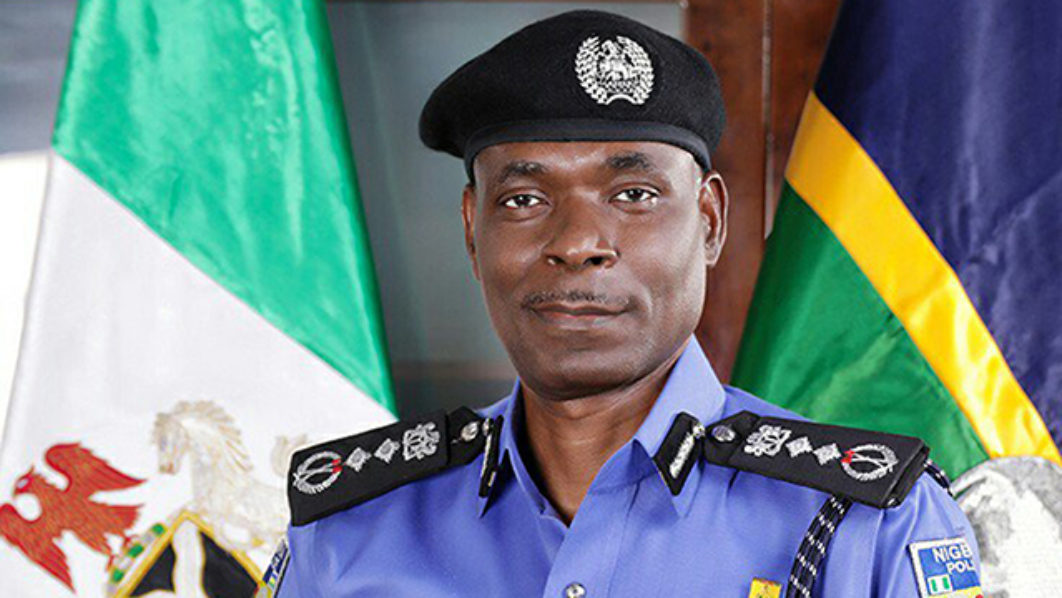
A pro-democracy and civil rights advocacy group, Human Rights Writers Association of Nigeria, has said the police lack the powers to stop peaceful protests in a democracy.
It described the statement by the Inspector-General of Police, Mohammed Adamu that those planning nationwide street protests termed “Revolution” will be charged for treasonable felony, as a product of “crass hypocrisy.”
National Coordinator of HURIWA, Emmanuel Onwubiko, who spoke on behalf of the group, said this in a telephone interview with our correspondent, in Abuja, on Sunday.
He said it was obvious that the police boss was yet to come to terms with the reality that Nigeria was now a democracy and that peaceful protest by citizens was an integral part of the democratic culture.
HURIWA accused the IGP of being “power drunk” and also behaving as if the country was still under the “Abacha type” military tyranny.
Onwubiko said, “This group has therefore told the police chief that civil protests can never be misconstrued as an attempt at change of government since there are a plethora of Constitutional provisions that recognise the people as the owners of the sovereignty of Nigeria, who donate to political office holders the authority and legitimacy through a democratic process and that the people have the inalienable right to also demand that good governance be institutionalised and to demand the resignation of a bad government.
“Demanding the resignation of a government that has no political will to stop the killings by armed Fulani herdsmen only because the President shares ethno- religious affiliations with the alleged killers; can never be termed as an attempt to unseat the government.
“Civil protests are essential elements of civil rule. Without the right to public protests then there is no constitutional democracy.
The Rights group said neither the police boss nor officers or men acting on his behalf had the constitutional backing to infringe on the rights of citizens to express themselves in a civil and peaceful manner through demonstrations.
According to him, only a court of competent jurisdiction was empowered by the constitution to commit a citizen to imprisonment on lawful charges brought before it through a competent process over a crime for which such a person would have been afforded the right to legal representation and fair hearing in compliance with section 36(5) of the Nigerian Constitution.
Speaking on the arrest and detention of Omoyele Soweore by the Department of State Services, Onwubiko said, the planned protests of the coalition coordinated by the now incarcerated online publisher; political activist and civil rights campaigner, Mr. Omowore Sowore, does not in any way amount to any attempt at regime change.
Ever before the commencement of colonialism, the people of what later became known as Nigeria were living under different administration or political arrangements.
However, the pre-colonial Nigeria symbolises the methods or ways by which Nigerians govern themselves before the advent of colonialism. It means traditional systems preceded the era of colonialism. From the same position, the pre-colonial Nigeria varies from one region the the other because the ethnic and ethno-linguistic differences.
For instance, while some political systems are centralized or chiefly society (e.g Yoruba pre-colonial system and Hausa/Fulani), others were decentralized or chiefless society (like the Igbo clan system which was acephalous in nature). Interestingly, indirect rule would not have been possible without the already established pre-colonial system.
YORUBA PRE-COLONIAL SYSTEM
It was generally believed that the Yorubas migrated into Nigeria from upper Egypt under their powerful father, Oduduwa. They occupied the Western part of Nigeria and the system of government practiced was monarchical in nature regarded as centralized administration ruled by king with the assistance of other chiefs. It is important to note that Yoruba pre-colonial administration was not highly centralized compared to Hausa/Fulani system. The reason being that the Oba is not an absolute ruler and there is the principle of checks and balance. Examples of Yoruba kingdoms include the Oyo kingdom, Ijesha, Ilesa, Ijebu, Abeokuta, etc. In this case, Oyo empire is normally being taken as case study.
POLITICAL INSTITUTIONS OF YORUBA KINGDOM/OYO EMPIRE
The Oba is the highest authority in Yoruba kingdom though not an absolute ruler. He is both political and spiritual head of the Oyo kingdom popularly known as Alaafin of Oyo.
Also, the Oba must be the eldest son of deceased king and a member of the royal family. He is well respected by the subject and this explains why some have regarded him to be the ‘working companion of gods’ (Alase Igbakeji Orisa). Not only that, Oba can be addressed as ‘Kabiyesi- Ka bi o ko si’ (Nobody to challenge your authority), yet, there is the principle of checks and balances.
Oba can checked by other institutions like Oyomesi, Ogboni cult, warlords, etc. The argument is that Oba must always respect the views of the people in the society. This, perhaps made Yoruba kingdom to be more democratic.
Oba ruled with the assistance of chiefs called Ijoye like Otun, Iyalode etc. With these chiefs, Oba can exercise judicial, legislative and executive power particularly over serious cases like land dispute, crimes etc.
Oyomesi can be regarded as king makers. They are prominent chiefs comprising seven notable individuals within the community. Specifically, Oyomesi are the institutions charged with the responsibility of appointing the king from a royal family. It is headed by Bashorun. However, the consent of the Oyomesi is required before any reasonable decision could be taken by Oba.
It is important to stress that the principle of checks and balance in Yoruba kingdom makes it possible for the Oyomesi to check the excesses of the king.
For instance, the Oyomesi (kingmakers) may compel the king to open calabash (it is an order to commit suicide) if the king is dictatorial and arbitrary in rulling the people.
The Ogboni cults on the other hand is often regarded as secret cult because their activities are much hidden to the public.
They perform rituals on behalf of the society, and also check the excesses of both the Oba and king makers. The group of Ogboni therefore is headed by Oluawo.
Esos or warlords is a group of people that provides adequate security in the Yoruba kingdom.
They helped to protect the life and properties as well as preventing the community from both internal and external aggression. It is headed by ‘Aare Ona Kakanfo’ who provides military support to the king. He is abnormally powerful and that explains why he stays outside the community.
More importantly, Aare Ona Kakanfo is expected to commit suicide if he losses any battle which means he must not be defeated at the war front.
Nevertheless, he check the excesses of any institutions by withdrawing or neglecting military responsibility.
Yoruba pre-colonial systems, Oyo empire as case study was centralized though with the principle of checks and balance.
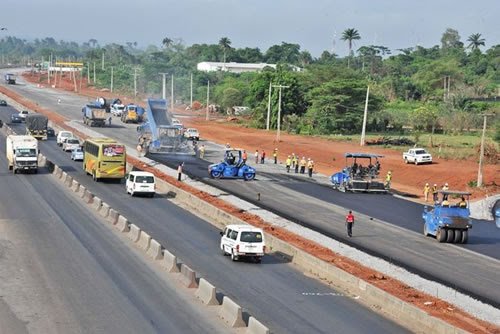
JESUSEGUN ALAGBE writes about the contrasting feelings of highway hawkers and commuters in the Lagos-Ibadan Expressway axis as Julius Berger Nigeria Plc partially closes the road on September 2 for four months from Berger Bus Stop to Kara Cattle Market sections for reconstruction
He ran as fast as his legs could carry him, latching on to transparent white nylon bags containing cooked guinea fowl eggs, his face etched with tiredness.
Tall and swift, the dark-complexioned Solomon Miracle from Ebonyi State sped past moving vehicles to catch up with a fair-complexioned lady at the back of a yellow 18-seater bus heading from Lagos towards Mowe, Ogun State.
Miracle was lucky; the bus had not moved beyond a few metres when the traffic on the Lagos-Ibadan Expressway held it down, so he was able to quickly meet up with the lady who wanted to patronise him. Within seconds, he sold two nylon wraps comprising four guinea fowl eggs each. He tucked the money inside his chinos shorts. It was Thursday, just two days before the initial planned partial closure of the Lagos-Ibadan Expressway announced by the Federal Government.
The Federal Controller of Works in Lagos State, Mr Adedamola Kuti, said the planned partial closure initially slated to start on Saturday (today) was for the road reconstruction. He said on Friday in a statement that the closure date had been shifted to September 2.
Another trader who sells bottled water, Sunday Ohimini, couldn’t contain his joy that the road would be partially closed. He reasoned that it would take no time before the arrival of September 2 even though he had planned for today.
The 22-year-old from Benue State said he had called his 18-year-old younger brother to join him in the sale of bottled water.
He said, “I sell many bottled water when there is traffic anywhere in Lagos. I can sell more than 100 bottles within hours if the traffic is really intense.
“With the planned closure of the expressway, I expect that there would be room to improve on my business and make more money.
“My brother would join me. He had travelled before now, but I have told him to return to join me in the business so we can make a huge profit.’’More in Home
Ohimini who is a dropout said he planned to return to school someday after making money.
He added, “I arrived in Lagos two years ago and I’ve been trying to make ends meet and even send a token to my parents weekly. If everything works fine, I will combine the business later with schooling.”
According to him, thirsty commuters should not expect to buy bottled water at the usual N50 but N100 during the period.
“Oga, this is Lagos and nobody came to the place to count the number of cars on the road or bridges built by the government,” he said.
Joy decorated the cheeks of an ice cream seller identified only as Moses, when SaturdayPUNCH approached him. He said the closure was a blessing in disguise for highways traders like him who survive in gridlock.
As of Thursday when our correspondent asked him for a particular flavour of ice cream, he said it had finished as commuters stuck in traffic on the road that day bought all his goods.
He said, “It’s going to be tough to meet up with demand. It will be a time I want to call traffic season and I hope to make more money. I intend to use the money to buy some household items I have been longing for.”
For Mustapha AbdulGaniyu, a trader in bed sheets and pillowcases from Kano State, the coming closure was the best news of the year, especially as it would drag towards the end of the year.
“I will surely profit from the situation because I sell more in traffic. I will send some money home to me people,” he said.
Great expectation
Miracle could no longer wait for the closure to come.
He said, “Anytime there is traffic, I usually sell about 50 nylon raps of guinea fowl eggs (four each in a wrap) per day at N200 per bag,” he told our correspondent at the Berger end of the expressway.
According to him, he is likely to make about N10,000 per day and N300,000 per month and N1.2m during the closure which will be for four months. “I will come out every day to make money,” he gleefully said. “With the traffic situation going to linger for four months, I hope to sell more eggs and make more money. It will be good if the traffic is ‘bumper-to-bumper’.
Asked if he might increase the price of his products, he said, “No, I won’t increase the price. I will still make money. I’m happy I would benefit from the expressway closure.”
Like Miracle, a plantain chips seller, identified only as Ezekiel, from Imo State, said he had no reason not to smile during the period. He anticipated selling more plantain chips throughout the period of the closure.
“I will be at the expressway to sell my goods every day. A lot of people eat plantain chips anytime there is traffic and I hope to exploit the four-month road closure to my benefit,” Ezekiel said.
The 24-year-old, who said he sold up to 100 sachets of plantain chips per day at N100 each, said he hoped to make more money during the period.
He said it would not be a bad idea to make good money during the period as he had some debts to pay. “I won’t spend all the profits as I have to pay some debts, I will still make some profit,” he said as he sped towards a black SUV to sell plantain chips to a woman who beckoned to him.
On her part, Mrs Taiwo Jimoh, who sells cooked groundnuts in traffic, said she hoped to rake in more money within the next four months.
The woman, who said she lived in the Ibafo axis of the expressway, said the expected traffic arising from the partial closure would be a blessing to her.
She said, “I’m going to benefit from the closure because there would be traffic. Some women like us are now the breadwinners in our families. I hope to make some money from the traffic situation to assist my family. The number of men providing for their families these days is low. If my husband is providing for us, I shouldn’t be this stressed. The closure of the expressway will bring pain to passengers but for me, it is both a blessing and pain. Coming to Berger to sell goods from Ibafo is not an easy task.”
Jimoh, who is probably in her 50s, however stated that the more the money they make from selling in traffic, the more the pain.
She said, “We run after moving vehicles almost throughout the day and the toll on the body is sometimes unbearable.” She pleaded with the government to deploy security men in the expressway because there might be cases of theft. “Some people sometimes rob us of goods on the expressway anytime there is gridlock.”
Another trader, identified only as Mrs Fatimoh, said she hoped to make more money from selling soft drinks and bottled water to commuters and motorists plying the road.
“Even though I am not happy that the situation would bring suffering to some people, traders like me would benefit,” she told SaturdayPUNCH.
Similarly, a street hawker, Rashidat, who sells roasted groundnuts and kulikuli(marched groundnut), said she would be able to make more money for her mother.
“I sell more when there is traffic and hope to make more money for my mother. With the likely closure, I am happy I will make much more money for her,” the teenager said.
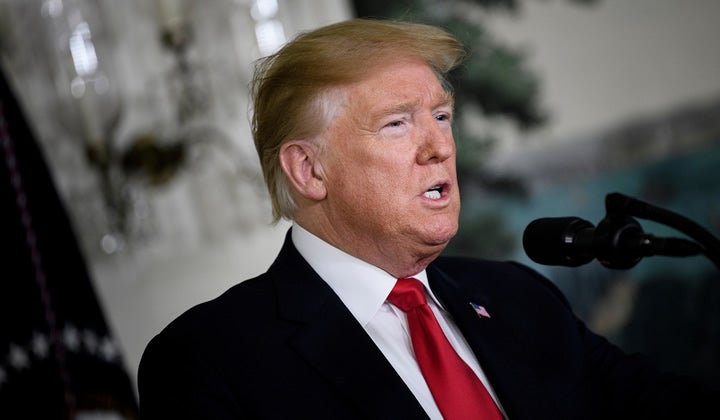
A judge on Friday blocked a move by US President Donald Trump’s administration to stop migrants from claiming asylum unless they had entered the country at an official border crossing, news outlets reported.
The policy, enacted by Trump last year, is among a host of measures his government has taken against the movement of hundreds of thousands of migrants from Central America and elsewhere who have recently tried to cross into the US from Mexico and request asylum.
Federal judge Randolph Moss, sitting in Washington, ruled that the policy was “in excess of statutory… authority,” ABC News reported.
Moss said it contradicts standing US immigration law, which allows undocumented people who are physically present in the country to apply for asylum even if they did not enter at an official port of entry, The Hill newspaper said.
The policy had earlier been blocked by a judge in San Francisco, a ruling the government is appealing.
Trump’s immigration policy has been the subject of numerous court challenges.
Last week, a federal judge in California issued a preliminary injunction blocking the administration’s new rule barring most immigrants from obtaining asylum in the US if they transit through Mexico.
That policy would have effectively prevented most Central American asylum seekers from gaining entry into the United States at the southern border, as the majority come through Mexico.
Day later, Guatemala signed an agreement with the US that, according to Washington, makes it a “safe third country,” meaning migrants who want to seek asylum in the United States but travel through Guatemala must request asylum in the Central American country.
The number of border-crossers detained by the US Border Patrol surged to a 13-year high of more than 144,000 in May before easing to 104,000 in June — still up 142 percent from a year earlier.
Most are families from Guatemala, Honduras and El Salvador.
FC Barcelona and Argentina captain Lionel Messi has been banned from international football for three months by the South American Football Confederation (CONMEBOL) following his claim the Copa America was corrupt.
The 32-year-old forward was sent off during Argentina’s 2-1 third-place play-off defeat of Chile and he later said the competition was fixed for hosts Brazil.
He has also been fined about N18 million (about 50,000 dollars or 41,121 pounds).
Messi has seven days to appeal the decision to suspend him, as well as the fine.
The ban means Messi will miss Argentina’s friendly matches against Chile, Mexico, and Germany in September and October.
The ban will, however, not disrupt Argentina’s qualifying campaign for the 2022 FIFA World Cup, as the qualifiers begin in March.
After Argentina’s 2-0 semi-final defeat by hosts Brazil, the Argentine Football Association had complained about “serious and gross refereeing errors”.
Messi was shown a red card in the 37th minute against Chile, following a clash with Gary Medel, who was also dismissed.
“We don’t have to be part of this corruption,” Messi had said. “They have shown us a lack of respect throughout this tournament.
“Sadly, the corruption, the referees, they don’t allow people to enjoy football, they ruined it a bit.”
CONMEBOL had responded by saying accusations questioning the integrity of the Copa America were “unfounded” and “represent a lack of respect”.
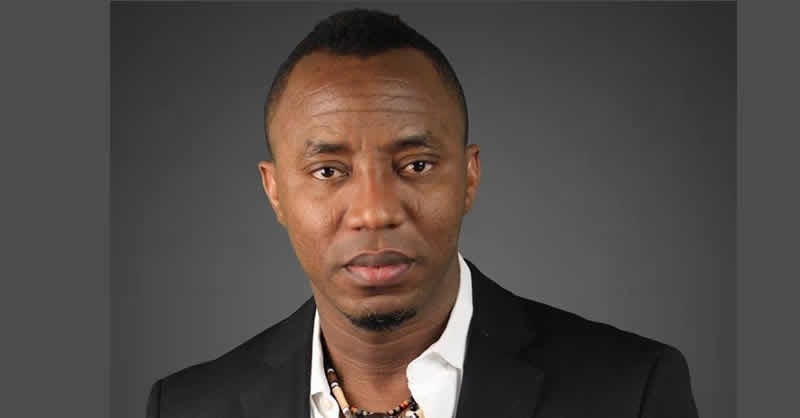
Presidential candidate of the African Action Congress in the February 2019 presidential election, Mr. Omowole Sowore, has been arrested by the operatives of the Department of State Services.
His publishing outfit, Sahara Reporters, broke the news.
According the Online medium, DSS operatives arrested Sowore in the early hours of Saturday at about 1.25 a.m.
It added that Sowore was picked up at his apartment in the early hours of Saturday.
Sowore posted a distress tweet at exactly 1:25 am with an eyewitness confirming that his phone was forcefully taken from him.
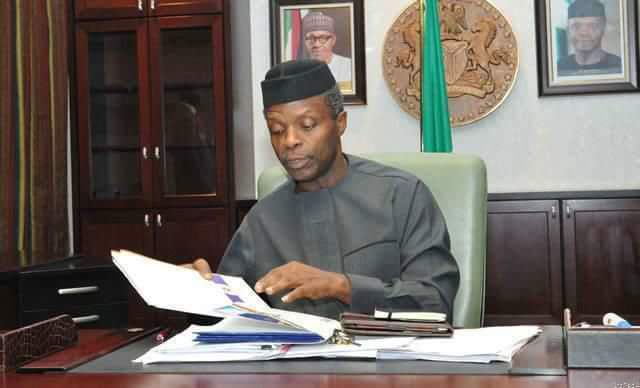
Vice-President Yemi Osinbajo on Thursday inaugurated the first 2.8MW solar hybrid power project at the Alex Ekwueme Federal University, Ndufu-Alike Ikwo, Ebonyi State.
The project was part of the Energising Education Programme of the Federal Government, which was implemented by the Rural Electrification Agency.
With the off-grid power plant, over 7,700 students and 1,819 faculty staff at the university would have access to clean reliable energy.
According to a statement, Osinbajo charged Nigerians to embrace the emerging renewable off-grid energy sector, saying it was poised to generate significant impact for Nigerian markets, as well as the unserved, underserved communities and higher institutions of learning.
“With the growing solar generation, in particular, a more decentralised energy system is emerging as we encourage more private sector participation, in collaboration with the Federal Government,” the VP said.
In her address, the Managing Director/CEO, REA, Mrs Damilola Ogunbiyi, said the EEP had the aim of rehabilitating existing distribution infrastructure to supply clean and reliable power to 37 federal universities and seven affiliated university teaching hospitals.
The Vice-Chancellor of FUNAI, Prof Nwajiuba Uzoma, said the project would provide a comfortable environment for the students.
Following confirmation by the Senate, the federal government has concluded arrangements for an induction retreat for its 43 Ministers Designate with a view to preparing them for the task ahead.
Secretary to the Government of the Federation SGF, Boss Mustapha who disclosed this in a statement Friday in Abuja added that relevant documents for their study and guidance, preparatory to the inauguration of the cabinet shall be available for collection at the Office of the Secretary to the Government of the Federation (OSGF) (Cabinet Affairs Office) next Tuesday.
“Ministers Designate are also requested to please bring along and submit to the OSGF, their updated CV in soft and hard copies as well as any valid identification document.
“Finally, I am pleased to inform you that, in view of the need to allow Ministers Designate enough time to study the documents (Status Report on Policies, Programmes and Projects; the 2019-2023 Road Map, FEC Handbook, etc) and considering the upcoming Sallah break, His Excellency, Mr. President has approved an Induction Retreat for Ministers Designate to be held at the State House Banquet Hall, Abuja from August 15-16, 2019”, the statement added.
The planned partial closure of a part of the Lagos-Ibadan Expressway for reconstruction has been postponed to Monday, August 5, as gathered by our correspondent.
Information gathered on Thursday from the construction firm handling the section one of the road from Lagos to Sagamu Interchange, Julius Berger Nigeria, indicated that reconstruction work might not begin fully until Monday as against the August 3 notice earlier given.
This, the source said, was to enable the Federal Government to conclude its sensitisation of leaders of the communities along the axis and other stakeholders to get their buy-in and ensure the smooth execution of the project.
The Federal Road Safety Corps had hinted that the construction company had given notification of its plan to commence the reconstruction work on the Berger Bus Stop – Kara Cattle Market end of the road on August 3, and would close some sections for about four months.
The Federal Controller of Works in Lagos State, Mr Adedamola Kuti, told The PUNCH on Thursday that work on the 1.4 kilometre portion of the road would include construction of drains and expansion of the road from two to three lanes on both sides.
“There will be reconstruction and expansion, which means we will be scrapping off the old surface, digging down and expanding the road to three lanes,” he said.
He stated that the reconstruction would however not affect the Kara Bridge, adding that there would only be some rehabilitation work on the road underneath to make it passable for motorists.
He said, “A lot of people live around this particular section of the road, which is why we gave the notice; otherwise, it is not different from what we have done on other portions of the road.
“We are starting with inbound Lagos, which will be closed with all traffic diverted to outbound Lagos, which will be divided into two for both inbound and outbound traffic.”
The Ogun State Sector Commander of the FRSC, Mr Clement Oladele, said plans had been concluded to involve the military in case of security issues.
According to him, security agencies will set up a camp around the affected area during the period of the closure to help with traffic control and other security issues that might arise.
Oladele said, “We have commenced deployment of personnel; we know it will be tough during the period because of the nature of the road but we can cushion the challenges if people cooperate with us. We don’t envisage problems. Julius Berger will provide directional signs and flashlights to guide motorists and we have met with the military for security cover.
“We have also negotiated with cattle sellers at the Kara Market to tell them not to sell along the road. All transactions should be carried out within the market during Sallah because that has always been a problem along that road.”
He also confirmed that stakeholders’ engagement with communities along the area was ongoing.
Oladele reiterated the need for motorists to use alternative routes such as the Epe/Ajah – Ijebu-Ode, Lagos – Ota – Itori – Abeokuta and Ikorodu – Sagamu roads during the period and avoid driving against traffic which could hinder free flow of traffic.
Julius Berger had last year said the Sagamu-Lagos end of the project currently being reconstructed in batches would be completed by 2021.
The project, which was initially to be completed in 2017, was stalled due to paucity of funds and recent review of the original construction plan.
The Federal Government has promised to invest in the animation industry and other creative sectors to make jobs available for youths, boost GDP, and achieve economic growth. Vice President Yemi Osinbajo stated this at the end of a four week-training for 1500 youths who participated in the N-Creative programme held in Benin.
The News Agency of Nigeria (NAN) reports the N-Creative is a component of the N-Power social investment programme of the federal government to empower Nigerian youths for prosperity.
The Vice President who was represented at the event by the Edo Governor, Mr Godwin Obaseki, said boosting creativity skills of the youths was at the core of the next level agenda of President Muhammadu Buhari’s second tenure.
“Creativity is centre to our government’s next level agenda as it will help tell our success stories in digital ways, drive employment, and tell our unique perception to the world’’.
The vice president noted that the total value of the global animation industry was 259 billion dollar in 2018 and it was projected to reach 270 billion dollar in 2020 noting that Nigeria must benefit from such investment.
“Animations are used in film production, games, adverts, medicine, training and education, e-learning, legal and insurance and 3D visualization. “It employs a lot of workforce and lucrative for the businesses and workforce,’’ he said. Osinbajo assured that the federal government would create an enabling environment for local production of animation content so that the country could be a pioneer hub in Africa in the light of the Africa Continental Free Trade Agreement.
“We intend to support the industry by exporting the services of young creative Nigeria and start to participate in global outsourcing market,’’ he said.
He said for the sector to thrive, the country needed fission of creative minds and creative enterprises on a scale that will make significance in the national and global space. Osinbajo said the N-Creative programme will stimulate creative and innovative skills in young Nigerians in the studio environment and animations.
He said it will also boost other relevant skills and link them to already established animators to produce educative and creative content.
“We are building your capacity and investing in the basic tools you will need to succeed in the creative world.
“The idea is that some of you will end up as entrepreneurs while others will be absorbed into the industry”. Gov. Obaseki, on his part said his administration was putting in place the basic infrastructure to support the growth of animation industry in the state.
“We are putting in place the core infrastructure required to set up animation industry, we are laying fibre optics, strengthening our basic education sector, creating alternate source of energy and building proposed Benin Enterprise Park.
“With government policy and infrastructure, we will be the silicon valley for animation in this part of the world,’’ he said.
In a welcome address, Mr Afolabi Imonkhuede, said the N-Creative, focused on harnessing and developing the untapped skills of the Nigerian youths in the creative arts and entertainment world that would compete globally.
Imonkhuede a Senior Special Assistance to the Vice president on Jobs Creation said 3000 youths were to be trained in the N-creative programme across the country-1500 each from southern and northern region-. He said the 1500 youths from the 17 Southern states had completed a four week creative training in the first phase while training for the northern states would commence soon.
Imonkhuede said the participants were trained in animation, voice acting, Post production, Graphics and Illustration and script writing and were given working tools to do practicals. “The next phase for the youths is studio training to practicalise what was learnt in phase one’’.
He urged the participants to see the training as an investment and to become worthy ambassadors of the programme to impact others.(NAN)




 StallionTV