RevolutionNow: Foundation Gives N50,000 To 70-year-old Protester Battered By Police

A foundation out of pity has given some thousands of naira to a woman who was battered for protesting the hardship in the land.

Mama Akanmu being battered by police officers

A foundation, Idera De Movement, on Sunday donated a sum of N50,000 to Mrs. Sariyu Akanmu, a septuagenarian fufu seller beaten by the Police during the Monday, August 5 protest organised by the #RevolutionNow group in Osogbo.

Mrs. Akanmu, an indigene of Agboyele Compound, Osogbo, was hawking fufu on the streets of Osogbo, Osun State capital, when she ran into members of #RevolutionNow who were protesting at Fagbewesa junction and joined them.

After almost two hours of protest, security operatives forcefully dispersed the protesters and arrested seven members of the group.

A director in Idera De Movement, Mr. Funsho Babarinde (right), presenting a sum of N50,000 to Mrs. Sariyu Akanmu.
When the security operatives descended on the protesters, among whom was Madam Akanmu, she was beaten and a policeman hit her in the waist with the butt of his gun.

Journalists at the scene rescued her.

The foundation said it donated the money to the 70-year old Akanmu to enable her to seek proper medical attention.

A director in the Idera De Movement, Mr. Funsho Babarinde, who presented the money to Akanmu on behalf of Dr. Akin Ogunbiyi, the foundation’s CEO, said the septuagenarian displayed uncommon courage by her action on the day of the protest.

Babarinde said, “When we first read the report on Tuesday in The PUNCH, many of us did not truly appreciate the heroism displayed by this woman.

“But Saturday PUNCH followed up the story with another interview with the woman.

“The truth is, many Nigerians don’t have her courage. As a foundation, the least we could do was to appreciate her.

“Our principal, Dr. Akin Ogunbiyi, could have personally presented this, but because he was not around, he directed us to give her a sum of N50,000.

“We are giving the money to her to enable her to seek proper medical care.”

Responding, Mrs. Akanmu, who spoke in Yoruba, expressed appreciation to Idera De Foundation and The PUNCH for the financial support.

“Your business outfit will not catch fire.

“Almighty God will not forget you and your families.

“As you have showed kindness to me, God will show kindness to you all.

“I am deeply grateful,” the aged woman prayed for her benefactors.

Source: Punch

Buhari Promises To Improve The Poor In His Second Term

President Muhammadu Buhari has promised to improve the lot of the poor and those in the lower rung of the society during his second term in office.

Addressing leaders of the various communities from the five council areas of Daura Emirate, who paid him a Sallah visit in Katsina State, the president said he was convinced that majority of Nigerians understood his person and mission hence he was given a fresh mandate of four years.He emphasized the place of agriculture in his administration’s policies, promising to appoint a knowledgeable minister that could promote investments in the sector.

Buhari expressed joy that the youths were beginning to embrace and earn big from agriculture, urging all without regular income to return to the farm.Besides, the president yesterday held a closed-door meeting with the Progressive Governors Forum at his Daura home. The Secretary to the Government of the Federation (SGF), Boss Mustapha, was also part of the gathering.

Although details of the assembly were not immediately made known to newsmen, it was, however, gathered that issues bordering on governance dominated the discussion.It was also learnt that the governors had come to pay an Eid-el-Kabir homage too to the Nigerian leader.Sources said the governors came in two batches with the first being the chief executives of Ekiti, Lagos, Edo, Gombe, Kebbi, Osun, Nasarawa and the host state, Katsina.Others, who came through Kano, were led by Governor Abdullahi Ganduje.

Buhari, who is in the state for a 10-day official visit, thanked the visitors for the trip.He had had several prominent personalities visit him in his home country.One of them was Prof. Alpha Conde, the Guinean leader, who was conferred with a traditional title by the Emir of Daura, Alhaji Farouk Umar Farouk.

The president is to commission some state government projects and visit a number of internally displaced persons (IDP) camps in the state.Today, he is to visit Batsari local council where several people had been victims of bandits, kidnappers and rustlers.

Ecobank Engages a New Set Of Graduates In Training

In keeping with its talent development strategy, a new set of Graduate Trainees are expected to commence their entry level development programme on Wednesday August 14 at the state of the art Ecobank Nigeria Academy in Lagos.

The training programme which was launched in July this year is an intensive 8-week medley of learning interventions for fresh graduates. The first set of 67 Trainees will graduate at the end of the month and will be absorbed into different roles in the Bank.

According to the Head, Human Resources, Ecobank Nigeria, Gloria Byamugisha, the first set of Trainees at the Academy demonstrated a high level of commitment and orientation towards the banking profession, noting that the training is essentially to improve the financial literacy of participants who may be coming from other disciplines, or who may have non-financial and banking related academic backgrounds.

“I am glad to announce that 58 entry level trainees will commence their development program on August 14 for eight weeks. This is the cohort two of the program. The entry level cohort one that started their eight week program on July 1 this year will graduate at the end of the month and will be absorbed into different roles in the Bank in line with their performance and individual profile assessment. At Ecobank we place a high premium on manpower development”

She further explained that the training combines classroom, on-the-job, book reading and action learning models, which provides the participants with global exposure and ability to compete internationally.

Commenting, Managing Director, Ecobank Nigeria, Patrick Akinwuntan said the training programme was in line with the transformation agenda to make the Bank the most preferred financial institution in the country, noting the Ecobank will continue to head hunt for brilliant fresh graduates, train them on professionalism and Ecobank culture and inject them into its workforce.

He further explained that the various Bank’s development programmes are part of its talent development strategy to continue to churn out excellently trained banking professionals at various levels of the industry to feed into her talent pipeline and the banking industry, stating that they are founded on global best practice that prepare the participants for banking careers in positions aligned with their potential, competencies and experience at the entry point of functional pre-managerial roles.

According to him, “Our training programmes are our way as a Bank to invest in creating future leaders for the Nigerian banking industry. We are investing in the people to accomplish our vision both as a Bank and a country. The staff of banks must be well trained and knowledgeable so that they can ensure that funds in the banks are effectively deployed,” stressing that for us at Ecobank, we must also ensure that we deliver on our promise as a financial institution of choice not only in Nigeria but the whole of Africa. We, therefore, take the development of adequately trained manpower as a “must do” in striving to achieve our goals,” he stated.

It would be recalled that the Ecobank Nigeria Academy was accredited by the Chartered Institute of Bankers of Nigeria (CIBN) earlier in the year.. That was after rigorous processes which included a high powered visit by the Registrar and members of the Institute’s accreditation committee that showed that Ecobank Nigeria has complied with and satisfied the provisions and requirements of the Competency framework for the Nigerian Banking Industry as mandated by the Central Bank of Nigeria (CBN) through CIBN.
The Entry Level Development Programme is an addition to the existing Ecobank Graduate and Management Trainee program which runs for 12 months and 21 months respectively at the Academy.

Thisday

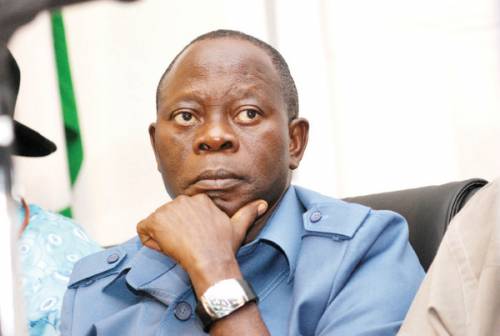
Obaseki is my brother, says Oshiomhole

All Progressives Congress (APC) National Chairman Adams Oshiomhole on Tuesday blamed that the perceived gulf between him and Edo State Governor Godwin Obaseki on fifth columnists.

The alleged rift “is the creation of people with personal interests”, Oshiomhole said, describing Obaseki as his brother.

Playing host to the governor, who led members of his cabinet to pay Salah homage to him on Monday night at his Iyamoh residence in Estako West Local Government Area, Oshiomhole said he and his successor have smooth relationship.

He told reporters after a closed-door meeting which lasted for about an hour that the meeting was not unusual as he was in constant touch with the governor Obaseki.

Oshiomhole said: “From time to time, we have always been meeting. It is not an unusual visit, the meeting afforded me the opportunity to meet with my brother and with people I have worked with.”

The APC chair described as unfortunate that the media liked creating factions for their own gain.

Obaseki also noted that the visit to his predecessor was not unusual, saying that he decided to celebrate Sallah with his former boss.

He said the visit was to celebrate Edo leaders just as the former APC national chairman, Chief John Odigie-Oyegun, was celebrated by the state earlier in the day.

Obaseki said: “There is nothing unusual about this meeting; today is Sallah and we have just finished celebrating with the former APC national chairman, Chief John Odigie-Oyegun in Benin City, and we decided to come here to celebrate Sallah with my predecessor.”

He added that people who think there was a rift between him and his predecessor should perish their thought.

The governor has always blamed the perceived rift between him and Oshiomhole on those opposed to the progress being witnessed in the state.

He said that his administration has been building on the foundation bequeathed to him, saying that those never wanted a new order decided to create a gulf between him and his predecessor.

Imo govt to begin road repairs, decries damages to water pipes as disaster


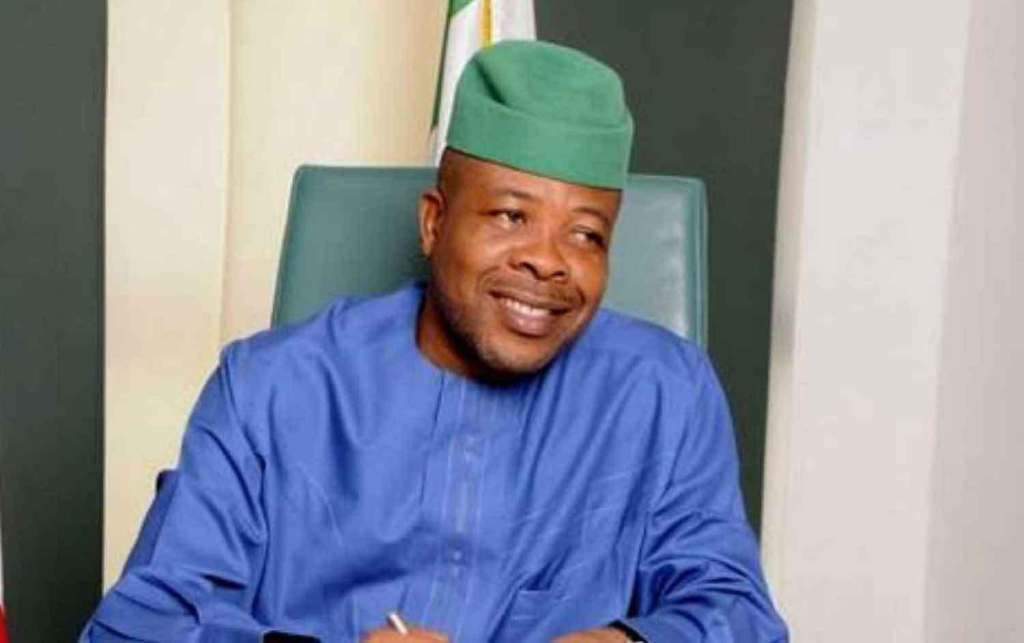
Imo State Government has said it is poised to immediately commence remedial repairs on some of the roads in the state. Emeka Ihedioha, obedience The Commissioner for Works, Engr. Benjamin Ekwueme made government’s position known yesterday, after inspecting some of the roads in the state. Also, the Imo govt, yesterday, said the cost of repairing damaged water pipes in the state are running into millions of naira, linking it to what it called “uncoordinated” road construction in the past eight years of Rochas Okorocha’s administration.

Commissioner for Public Utilities, Chuma Nnaji, told Vanguard in Owerri that potable water supply by the current government was halted due to the burst pipes, and that efforts are on to correct the situation to avoid spilling of water in the streets of Owerri. Nnaji said: “We spent five hours at Otammiri, trying to look at that infrastructure and I discovered that what is left there are dead remnants of what late Sam Mbakwe did, Achike Udenwa and Ikedi Ohakim. Nothing about Okorocha. He tried only to kill the place.

“The good thing now is that as Emeka Ihedioha promised, we are looking at the side of development partners. We are bringing in the World Bank and USAID towards reviving the water project in Imo State.”

On-road repairs, apart from the Owerri municipal roads, Ekwueme also inspected the entire stretch of Naze-Nekede-Ihiagwa-Obinze Road, which leads to the Federal Polytechnic, Nekede, and the Federal University of Technology, Owerri, FUTO.

He said: “Imo govt is truly worried about the gross dilapidation of Imo roads, occasioned by equally gross neglect by the immediate past administration. Government is poised to give urgent and remedial attention to the roads.”

He branded the roads as “a huge disaster,” stressing that the present administration is not only disturbed about the situation but is determined to stop the people’s suffering on the roads.

Vanguard

8 Tips For Healthy Eating

These 8 practical tips cover the basics of healthy eating and can help you make healthier choices.

The key to a healthy diet is to eat the right amount of calories for how active you are so you balance the energy you consume with the energy you use.

If you eat or drink more than your body needs, you’ll put on weight because the energy you do not use is stored as fat. If you eat and drink too little, you’ll lose weight.

You should also eat a wide range of foods to make sure you’re getting a balanced diet and your body is receiving all the nutrients it needs.

It’s recommended that men have around 2,500 calories a day (10,500 kilojoules). Women should have around 2,000 calories a day (8,400 kilojoules).

Most adults in the UK are eating more calories than they need and should eat fewer calories.

1. Base your meals on higher fibre starchy carbohydrates

Starchy carbohydrates should make up just over a third of the food you eat. They include potatoes, bread, rice, pasta and cereals.

Choose higher fibre or wholegrain varieties, such as wholewheat pasta, brown rice or potatoes with their skins on.

They contain more fibre than white or refined starchy carbohydrates and can help you feel full for longer.

Try to include at least 1 starchy food with each main meal. Some people think starchy foods are fattening, but gram for gram the carbohydrate they contain provides fewer than half the calories of fat.

Keep an eye on the fats you add when you’re cooking or serving these types of foods because that’s what increases the calorie content – for example, oil on chips, butter on bread and creamy sauces on pasta.

2. Eat lots of fruit and veg
It’s recommended that you eat at least 5 portions of a variety of fruit and veg every day. They can be fresh, frozen, canned, dried or juiced.

Getting your 5 A Day is easier than it sounds. Why not chop a banana over your breakfast cereal, or swap your usual mid-morning snack for a piece of fresh fruit?

A portion of fresh, canned or frozen fruit and vegetables is 80g. A portion of dried fruit (which should be kept to mealtimes) is 30g.

A 150ml glass of fruit juice, vegetable juice or smoothie also counts as 1 portion, but limit the amount you have to no more than 1 glass a day as these drinks are sugary and can damage your teeth.

3. Eat more fish, including a portion of oily fish

Fish is a good source of protein and contains many vitamins and minerals.

Aim to eat at least 2 portions of fish a week, including at least 1 portion of oily fish.

Oily fish are high in omega-3 fats, which may help prevent heart disease.

Oily fish include:

salmon
trout
herring
sardines
pilchards
mackerel
Non-oily fish include:

haddock
plaice
coley
cod
tuna
skate
hake
You can choose from fresh, frozen and canned, but remember that canned and smoked fish can be high in salt.

Most people should be eating more fish, but there are recommended limits for some types of fish.

Find out more about fish and shellfish

4. Cut down on saturated fat and sugar
Saturated fat
You need some fat in your diet, but it’s important to pay attention to the amount and type of fat you’re eating.

There are 2 main types of fat: saturated and unsaturated. Too much saturated fat can increase the amount of cholesterol in the blood, which increases your risk of developing heart disease.

On average, men should have no more than 30g of saturated fat a day. On average, women should have no more than 20g of saturated fat a day.

Children under the age of 11 should have less saturated fat than adults, but a low-fat diet is not suitable for children under 5.

Saturated fat is found in many foods, such as:

fatty cuts of meat
sausages
butter
hard cheese
cream
cakes
biscuits
lard
pies
Try to cut down on your saturated fat intake and choose foods that contain unsaturated fats instead, such as vegetable oils and spreads, oily fish and avocados.

For a healthier choice, use a small amount of vegetable or olive oil, or reduced-fat spread instead of butter, lard or ghee.

When you’re having meat, choose lean cuts and cut off any visible fat.

All types of fat are high in energy, so they should only be eaten in small amounts.

Sugar
Regularly consuming foods and drinks high in sugar increases your risk of obesity and tooth decay.

Sugary foods and drinks are often high in energy (measured in kilojoules or calories), and if consumed too often can contribute to weight gain. They can also cause tooth decay, especially if eaten between meals.

Free sugars are any sugars added to foods or drinks, or found naturally in honey, syrups and unsweetened fruit juices and smoothies.

This is the type of sugar you should be cutting down on, rather than the sugar found in fruit and milk.

Many packaged foods and drinks contain surprisingly high amounts of free sugars.

Free sugars are found in many foods, such as:

sugary fizzy drinks
sugary breakfast cereals
cakes
biscuits
pastries and puddings
sweets and chocolate
alcoholic drinks
Food labels can help. Use them to check how much sugar foods contain.

More than 22.5g of total sugars per 100g means the food is high in sugar, while 5g of total sugars or less per 100g means the food is low in sugar.

5. Eat less salt no more than 6g a day for adult

Eating too much salt can raise your blood pressure. People with high blood pressure are more likely to develop heart disease or have a stroke.

Even if you do not add salt to your food, you may still be eating too much.

About three-quarters of the salt you eat is already in the food when you buy it, such as breakfast cereals, soups, breads and sauces.

Use food labels to help you cut down. More than 1.5g of salt per 100g means the food is high in salt.

Adults and children aged 11 and over should eat no more than 6g of salt (about a teaspoonful) a day. Younger children should have even less.

6. Get active and be a healthy weight

As well as eating healthily, regular exercise may help reduce your risk of getting serious health conditions. It’s also important for your overall health and wellbeing.

Being overweight or obese can lead to health conditions, such as type 2 diabetes, certain cancers, heart disease and stroke. Being underweight could also affect your health.

Most adults need to lose weight by eating fewer calories.

If you’re trying to lose weight, aim to eat less and be more active. Eating a healthy, balanced diet can help you maintain a healthy weight.

Check whether you’re a healthy weight by using the BMI healthy weight calculator.

Start the NHS weight loss plan, a 12-week weight loss guide that combines advice on healthier eating and physical activity.

If you’re underweight, see underweight adults. If you’re worried about your weight, ask your GP or a dietitian for advice.

7 . Drink enough water

You need to drink plenty of fluids to stop you getting dehydrated. The government recommends drinking 6 to 8 glasses every day. This is in addition to the fluid you get from the food you eat.

All non-alcoholic drinks count, but water, lower fat milk and lower sugar drinks, including tea and coffee, are healthier choices.

Try to avoid sugary soft and fizzy drinks, as they’re high in calories. They’re also bad for your teeth.

Even unsweetened fruit juice and smoothies are high in free sugar.

Your combined total of drinks from fruit juice, vegetable juice and smoothies should not be more than 150ml a day, which is a small glass.

Remember to drink more fluids during hot weather or while exercising.

8. Do not skip breakfast

Some people skip breakfast because they think it’ll help them lose weight.

But a healthy breakfast high in fibre and low in fat, sugar and salt can form part of a balanced diet, and can help you get the nutrients you need for good health.

A wholegrain lower sugar cereal with semi-skimmed milk and fruit sliced over the top is a tasty and healthier breakfast.


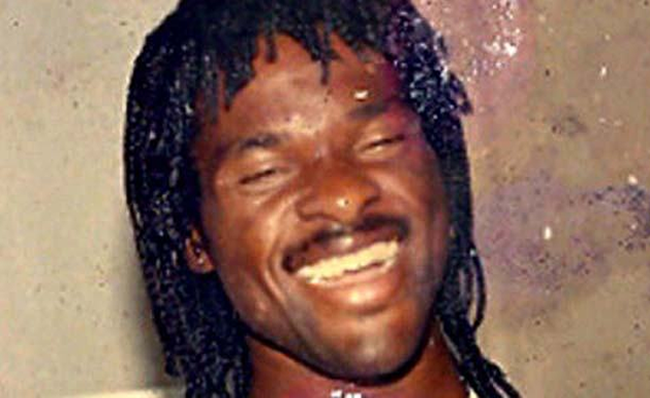
NFF, Nigerians pay tribute to Okwaraji after 30yrs

Thousands of Nigerians on Monday paid tribute to late Super Eagles midfielder, Samuel Okwaraji, who died on August 30, 1989 at the National Stadium, Lagos during the 1990 World Cup qualifier against Angola.

Apart from the Nigerians, the Nigeria Football Federation also celebrated the 30th anniversary of the player’s death.

While paying tribute, they sympathised with the family of the player, who collapsed and died during the match against Angola.

“It’s been 30 years since this real and true Nigerian Patriot passed on while on duty for the country. Keep resting in peace, Okwaraji,” NFF said in a tweet.

The NFF also shared a video on the memory of the late Okwaraji, who capped eight times for Nigeria and scored once, with a short message from its president, AmajuPinnick.

“We still feel and respect the labours of our heroes past, and we want to say today, being the 30th year that late Okwaraji passed on while playing, we still feel the sacrifice and patriotism that he showed, playing for this great country. And we have learnt great lessons from that patriot, even as we continue to use his attitude to guide young talents,” the message read.

Before his death, Okwaraji was a doctorate degree student of law from the University of Rome. He was born on May 19, 1964.

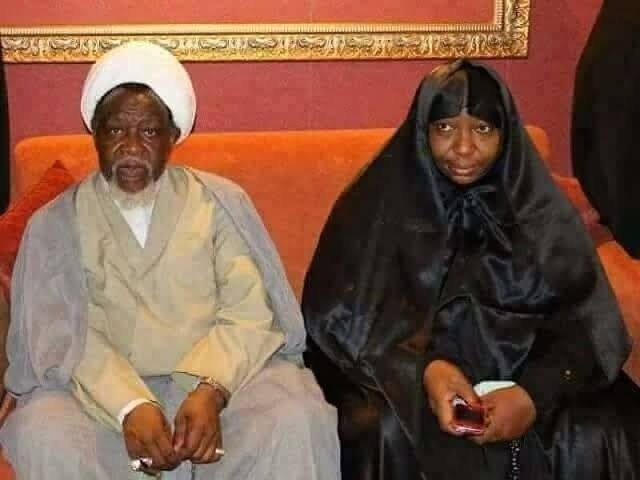
El-Zakzaky, Wife jet out to India for medical treatment

Leader of the Islamic Movement in Nigeria, Sheikh Ibrahim El-Zakzaky, will in the next few hours depart the Nnamdi Azikiwe International Airport, Abuja, to India for medical treatment.

This follows the order of the Kaduna State High court granting El-Zakzaky and his wife leave to undergo treatment at an Indian hospital of their choice.

The order came after the couple had spent over three years in custody.

The court had ordered that they should be released by the Department of State Services to go for treatment and return for the continuation of their trial after their discharge from the hospital.

Oyegun unite APC and PDP in Edo

Leaders of the All Progressives Congress (APC) and Peoples Democratic Party (PDP) in Edo State, yesterday, momentarily put partisan politics aside to celebrate the 80th birthday of former governor, Chief John Odigie-Oyegun.

Archbishop of Catholic Diocese of Benin, Archbishop Augustine Akubeze, used the occasion of the birthday thanksgiving church service to speak truth to power, calling on government to address issues bordering Nigerians.

Akubeze who spoke at a thanksgiving mass at the Saint Paul’s Catholic Church, Benin City, described Oyegun as one of the few former governors who is living out his faith’, adding that Oyegun did not join politics to fool the electorate but to convince the electorates.

He urged political leaders to respect constituted authorities, admonishing that political leaders should know that anybody who wants peace must work for justice.

Speaking on the crisis in the Edo State House of Assembly, Akubeze urged Oshiomhole and Governor Godwin Obaseki to meet and discuss on ways to move the state forward.

He said Edo people saw Oshiomhole as a leader who aligned with the poor and Governor Obaseki a technocrat who believes in rewarding merit and ensuring that the resources of the state are used for the good of the people.

National Chairman of the PDP, Chief Uche Secondus, who led PDP chieftains to the occasion, described Oyegun as a national leader.

In his speech, Governor Obaseki insisted that there was no issue between himself and Oshiomhole, disclosing that he has met with Oshiomhole and that efforts were being made to resolve issues created by third parties in the state.

He announced that the soon-to-be-completed Civil Service Training Centre would be named after Chief Oyegun for his contributions to the development of the state and the country at large.

“We have met, me and my predecessor in office and fortunately, we do not have any fundamental issues. And because we do not have any fundamental issues, I believe that whatever third parties are trying to propagate I am sure we can talk over it. I assure you that very soon things will return to normalcy in Edo State.

“Today we are here to celebrate our own Chief Odigie-Oyegun. On behalf of the people and Government of Edo State, I want to congratulate you on your 80th birthday.

“For your contributions and what you have done for our dear state, I have decided to name the public service academy, which is under construction, after you. We know your passion for public service; we know and acknowledge the contributions you made to public service in Nigeria. It will be known as the John Odigie-Oyegun Institute for Public Administration.”

Dr. Osagie Ehanire, minister-designate, said Oyegun deserved all the accolades having achieved what many people dreamt of.

Dignitaries at the event included Chief Gabriel Igbinedion, former governor Lucky Igbinedion, state chairman of the PDP, Chief Dan Orbih, Ondo State Governor, Rotimi Akeredolu and his wife, Betty Akeredolu; Speaker of Edo State House of Assembly, Frank Okiye; Chief Judge of Edo State, Justice Esohe Ikponmwen and representatives of tOmo N’Oba N’Edo, Uku Akpolokpolo, Ewuare 11.

All Is Not Yet Lost For This Great Nation – Tay

After completing his three-year ecclesiastical calling as President of the Nigeria Lagos Mission, of the Church of Jesus Christ of Latter-Day Saints on June 30, 2019, Cornelius Tay has opened up on several national, leadership, religious and corporate issues in the country.

He spoke to Daily Sun on various issues.

Could you kindly tell us what you have been doing in the last three years?

My work in those three years was to visit hundreds of people who desired to know about Jesus Christ and to teach them the gospel. In the humble homes of these people, I particularly appreciated the interest of many people in knowing the teachings of Jesus Christ relative to the gospel and how such teachings can be helpful to them in having peace of mind, as well as preparing them for the hereafter. Although these three years have not been easy time for me, I am grateful for achieving the critical objectives of my calling to preach and invite thousands to come unto Jesus Christ.”

Many have said that part of the problems of Nigeria is leadership. What is your perspective, especially concerning politicians who are as- piring to lead the country?

Politicians are not the ones who are going to save Nigeria. I am not saying this to make any professional politician feel that their role is not important. Their role is important. But it should not be the dominant role. When a nation considers politicians as the dominant players who will shape the nation’s destiny, a big mistake is made. The great nations of this world are built by various groups; all of them with a strong desire to perfect their institu- tions. It is not through political means alone, but by the collective capabilities and capacities of those who manage the institutions.

I cannot sit here and tell you that there is a formula to change what we see on the ground today. But I know that God has not forgotten Nigeria, neither has He stopped favouring Nigeria as a country. With time, right would prevail over wrong; greed and selfishness will give way to the love of others; power of love will replace the love of power at critical leader- ship levels. And the people would become the beneficiaries of the great blessings that God has endowed this country with.

I am not a politician. I have never been a politician and I will never be a politician. I am interested in the politics of the nation. I am interested in political parties, more because of what parties should stand for, which is meaningful ideologies. I am interested in knowing who means well for this nation and how they are elected. I am interested in how people are governed and what opportunities are provided for them to live good lives. I will support organisations that mean well for the nation and her people. I will support programmes that will drive the economy in the direction that will bring good to the people. But the level of poverty among our people today saddens me, to the extent that Nigerians have become beggars in their own land. This is not the kind of environment that would bring the joy that our Creator promised us as His children for our mortal existence. God does not want us to suffer. He has not created us to suffer. God’s purpose for us is to have joy. For this God has blessed the land. He has not pronounced the blessing upon the land for just a few, but for all Nigerians. So what we ought to be thinking about is how we are going to get to the point where we would have that blessing and joy.

How can we achieve genuine leadership when Nigeria is divided by tribalism and religious intolerance?

What I can say is this. And this is what we are taught by living prophets in our midst today. If there is going to be peace in the land, it is because of righteous leadership working in unity with many equally righteous men and women across the land. In this scenario, the masses would be the beneficiaries. So, if you look at the levels, all those who constitute the overall leadership of this nation, are required to replicate their best values in multiple levels below them. And the responsibility of these leaders will be to ensure these values trickle down; with the responsibility of sharing the common good with the masses. If these critical levels are not appropriate or effective at the level of the masses, the nation’s progression will naturally slow down. Well, there is the hope for Nigeria. These things will come to pass. I have worked in and travelled across many states of Nigeria and what I discovered is that hope is not lost. The moment we talk and amplify things that have the coloring of hopelessness or divisiveness, then we are going to undermine any possible rescue plan for Nigeria. Hope is not lost. Despite the fact that in many things we are going down, I can also say that in many things we have the potentials for greatness. I do not see any form of crisis or conflict that would destroy this nation. While the middle class and youth look up to those at the top, we all must be wise and do what is right. We have to change our ways and do what God has commanded us to do. We must live right.

What role have you played in leadership?

As far back as the 1960s I would say that I have been privileged to live and play leadership roles. From 1969 up to now, I have been involved with one form of leadership or the other; as a leader in my secondary school
days to the university, in my career and in management. For the past 50 years of my life, I have had the special privilege of operating in leadership capacity. The capacity to lead is a spiritual gift. It is not acquired by inordinate ambition or selfish motive. It is made possible by divine competence, the willingness and the availability, as well as the passion of that person to achieve goals through self-motivation and the motivation of others. I hold the position that this model of leadership is less about self and more about others. It aims to bring out the very best potentials in things and people in a natural way. Spirituality drives this type of leadership capacity to the extent that it becomes sustainable and therefore brings out good in all people and circumstances. At the end of these three years as Mission President of the Nigeria Lagos Mission of the Church

of Jesus Christ of Latter-Day Saints, I have personally experienced a most remarkable era of my entire life. This is because from a back- ground of leading organizations and others to achieve corporate goals, I have consecrated my resources to lead a large missionary force of men and women who have committed themselves and similarly dedicated their time for the advancement of the doctrine of Jesus Christ. I am extremely grateful for the oppor- tunity to serve and work for the Redeemer of all mankind, Jesus Christ in a direct way over three years.

You see, leadership is about carrying your “cross”. And once any leader, in any capacity, can identify that there is a “cross” to be carried in that position, that individual is half way to the success zone. In any leadership position, there must be challenges. A leader must stand up for what is right. This is lacking in Nigeria today. Leaders must be able to demonstrate, by their character, the true essence of integrity. Those who accept to lead other people, organi- zations and institutions must be ready to make sacrifices. Leaders take responsibility and aim to create and maintain order and build good character that will live with all and everything they have responsibility for. Leaders should look at everything that faces them as a chal- lenge, and something they have the capability to overcome.

What do you think of Nigeria as a nation?

I look at Nigeria and I ask myself the question: Can we be a better nation? By the nature of my assignment, the question I ask when I meet with people who desire to know more about the Gospel or the Doctrine of Jesus Christ is very simple. Can knowing the Gospel of Jesus Christ make you a happier and better person? When they say yes, then we begin to have a common ground to talk.

So it is the same way I look at our nation and I ask the same question. Over 60 years that I have seen this nation operate as an entity, and having an understanding and a feel of what the nation was, prior to Independence in 1960, my conclusion is simple. We are generally underperforming as a nation. And this is so because the nation lacks the depth of leadership competences at the most critical points required to transform peoples’ lives. When leadership has the capacity to motivate people to arise and do right things, that is when the collective force of our rich human capital begins to bring about exceptional changes for good. And the vast natural and potential resources of this great nation can become beneficial to the majority of the people. I still believe that this can be achieved, and optimum performance of Nigeria as a nation can be attained and sustained for the good of all. We are not there yet. Some of us may pass on and never see it come to pass. My desire is to see all stakeholders in sovereign Nigeria resolve to make the deliberate and critical changes to evolve a common vision that would be the basis for government to transform this nation. Any effort that fails to realize that changes need to be made urgently is a waste of time and resources. If we are waiting for government or professional politicians to evolve a vision for this nation that will become the platform to transform all other arms and institutions of this land, it’s going to take a long time. Nigeria needs leaders who will have a very clear vision; and who will pursue that vision with clearly defined goals.

I have never lost hope in Nigeria, because we have potentials. And this gives me joy that all is not yet lost for this great nation.

Could you recall some fond memories as leader of missionary work in the part of the country for your church?

I will miss the simple families and hundreds of individuals across all faiths I have met in the cities and remote parts of Lagos, Ogun, Oyo, Osun, Kwara, Kaduna, Plateau states as well as Abuja who I have shared the message of the restored Gospel with or engaged in positive discussions about God’s purpose for our existence on Earth. All those people are looking for answers to questions of the soul and I am grateful for what we are learning from one another as they became more knowledgeable and understood the purpose of their lives. It is a different world from sitting in the corporate office of Toshiba in Singapore, or sitting in the UK office of many international clients in my corporate life. It is different. These ordinary people and families are looking for peace, joy or some kind of hope that there will be a better tomorrow. Wishing to know more about Jesus Christ and what He taught.

They have not known Him well enough. Those are the things that I am going to miss.
I will miss hundreds of young full time Mis- sionaries who served with me in the past three years. These young men and women from different countries of West Africa-Guinea, Liberia, Sierra Leone, Cote d’ Ivoire, DR Congo, Benin Republic, Togo, Ghana, and Nigeria have also had life changing experi- ences that will make them assets to their families, communities and nations. These are the things that I am going to miss. They are not corporate matters, they are ecclesiastical. But I am okay. There is a time for everything. And as to the question, what will I do after this phase, I know not. But my focus to the last day in this Mission will remain the Savior’s work, for which I came here in the first place.

Design a site like this with WordPress.com
Get started