Army arrests oil thieves in Bauchi

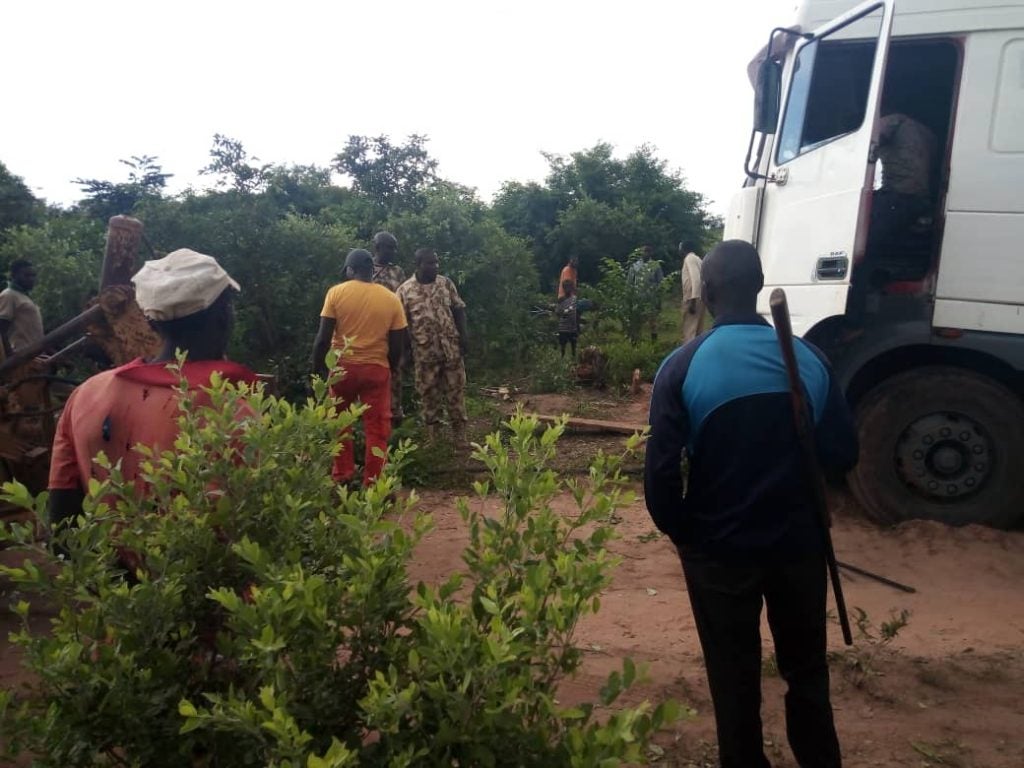
Suspected oil thieves at Alkaleri Local Government Area of Bauchi State have been arrested while a fuel tanker and other items used to siphon fuel from pipelines were impounded, the Nigerian Army has said.

The arrest and seizure were made by troops of the 33 Artillery Brigade, Bauchi.

Brigadier General Michael Durowaiye, the Brigade Commander, disclosed this to journalists on Monday while handing over the intercepted fuel tanker and other items used by the suspected oil thieves to the Nigerian Security and Civil Defence Corps in the state, at the 33 Artillery Brigade headquarters in Bauchi.

Durowaiye who was represented by the Garrison Commander of the Brigade, Colonel Gabriel Osho, said that the suspected thieves, on sighting the army’s patrol vehicle, fled and abandoned the tanker and items used for their bunkering activities at the scene.

He said that the items recovered included a fuel tanker, two power generators, one hand pump, one pipe, one drilling machine, one welding machine, 26 welding electrodes rods, one X Vanier calliper and three drilling rods.

The Brigade Commander said, “We will continue to go after oil thieves and ensure that we arrest them to make sure that the whole place is devoid of such criminals.”

Speaking while receiving the tanker and the recovered items, the Commandant of the NSCDC in Bauchi, Halliru Alhassan, commended the army troops for arresting the suspects and recovering the items used for the illegal bunkering.

He lamented that their activities cost the country billions of naira and vowed to work closely with other security agencies and members of the public to ensure that suspects are arrested and prosecuted.

The Commandant was represented by Daniel Taki.

Court refuses to stop Buhari from inaugurating ministerial nominees

A Federal High Court in Abuja has rejected the request to restrain President Muhammadu Buhari from inaugurating the ministerial nominees recently cleared by the Senate.

Justice Taiwo Taiwo, in a ruling on Monday, dismissed an ex-parte application file by a lawyer, Musa Baba-panya.

Justice Taiwo said he will prefer to hear the substantive suit and give a formal judgment rather than granting interim restraining orders as sought by the plaintiff.

The judge ordered the plaintiff to effect personal service of the originating and other processes so far filed in the case on the defendants and return for a date for hearing.

The plaintiff’s contention is to the effect that the President’s non-nomination of an Abuja indigene as a ministerial nominee was disobedience of a subsisting judgment of the Court of Appeal.

Baba-Panya claimed that the Court of Appeal, in the judgment delivered on March 15, 2018 in Abuja, held among others, that Abuja possesses the status of a state and should be so treated.

To the plaintiff, since the Constitution stipulates that every state of the federation should produce a minister, Abuja deserves to also be considered.

President Buhari and the Attorney General of the Federation (AGF) are listed as defendants in the case marked: FHC/ABJ/CS/878/19.

Details shortly.

Northern group backs Sowore’s #RevolutionNow protest

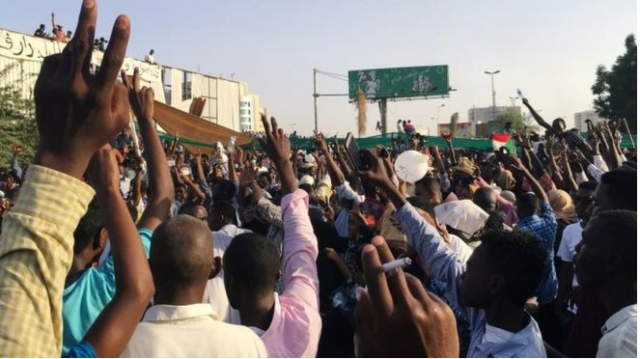
The Joint Northern Action Front on Sunday announced that it will participate in the #RevolutionNow protest against President Muhammadu Buhari’s administration.

The group called on northerners to join other activists across the country to protest the bad governance of the All Progressives Congress-led Federal Government.

According to a signed statement by the Chairman, Samuel Katung; and the Secretary, Tanko Mustapha, the group said it decided to join the protest because “President Buhari seemed not to be in charge of the current government, allowing the cabals to be in the driver’s seat while he(Buhari) is in the passenger seat.”

The group added, “We are believers in the personal integrity and capabilities of President Muhammad Buhari and it is out of love and desire to see him carry this country to the Next Level that we joined the protests to force him to take the wheel of the Nigerian ship and not forsake the country in the hands of a cabal without people’s mandate or human sympathy.

Punch

No ban, restrictions on importation of food items — Presidency

…Says importers can source for forex from non-govt financial institutions

THE Presidency yesterday said that the Federal Government has neither banned nor restricted importation of food items into the country.

It also explained that the recent directive by President Muhammadu Buhari to the Central Bank of Nigeria, CBN, to stop providing foreign exchange for importation of food items did not mean a restriction on the importation of food items.

A statement by the Senior Special Assistant to the President on Media and Publicity, Mallam Garba Shehu, in Abuja further stated that any importers of food items that wished to source their forex from non-government financial institutions (and pay Customs duty on those imports – increasing tax-take) were free to do so.

CBN to Nigerians: We’re ready to provide loans for those who want to go into cattle rearing business The Presidential spokesman was replying to a report in Financial Times, which was a letter to the Editor with the titled, “Muhammadu Buhari sparks dismay over policy shift on food imports”, published on August 15, 2019.

Shehu wrote: “Your article, ‘Muhammadu Buhari sparks dismay over policy shift on food imports’ (August 15) suggests the Nigerian government is restricting the import of agricultural products into the country. “This is simply incorrect.

To be absolutely clear, there is no ban or restriction -on the importation of food items whatsoever.

“President Buhari has consistently worked towards strengthening Nigeria’s own industrial and agricultural base.

A recent decision sees the Central Bank maintain its reserves to put to use helping growth of domestic industry in 41 product sectors rather than provide forex for the import of those products from overseas. “Should importers of these items wish to source their forex from non-government financial institutions (and pay Customs duty on those imports – increasing tax-take, something the Financial Times has berated Nigeria for not achieving on many occasions) they are freely able to do so.

Diversification of forex provision “Diversification of forex provision towards the private sector and away from top-heavy government control, a diversification of Nigeria’s industrial base, and an increase in tax receipts – are all policies one might expect the Financial Times to support.

CBN issues ‘disclosure, transparency guidelines’ on Consumer Protection Framework “Yet for reasons not quite clear, the author and this newspaper seem to believe the President’s administration seeks to control everything – and yet do so via policies that relinquish government control.

We look forward to the next installment of Mr. (Neil) Munshi’s bizarre and puzzling article series.” The Financial Times report was titled, “Muhammadu Buhari sparks dismay over policy shift on food imports. Critics say Nigerian President’s move threatens to send prices skyrocketing.” It read:

“Nigerian President Muhammadu Buhari is coming under fire after calling for the Central Bank to stop providing the foreign currency needed to pay the country’s vast food import bill. “Mr Buhari this week “directed” the Central Bank to cease providing dollars and other currencies to importers as part of his efforts to spur domestic agricultural production and attain “full food security” for Africa’s most populous nation. “But he drew criticism from economists and analysts who said the move threatened to send food prices skyrocketing and brought the central bank’s independence into question.

“ Since 2015 the central bank has enforced a controversial policy that denies foreign currency for dozens of imported products from cement to toothpicks to rice, but Mr Buhari’s call would represent a vast expansion of the prohibition.

“Don’t give a cent to anybody to import food into the country,” the President said, according to a statement from his spokesman, who added that “the foreign reserve will be conserved and utilised strictly for diversification of the economy, and not for encouraging more dependence on foreign food import bills.

CBN regulation: Banks to increase lending by 8.6% in 2019 ― Analysts “The Central Bank has not said whether it will follow the directive and did not respond to a request for comment.

‘’Analysts said that instead of inspiring a renaissance of Nigerian agriculture, the foreign currency import ban would create food shortages, drive further smuggling, and send prices higher.”

Group condemns attack on Ekweremadu by IPOB, demands apology

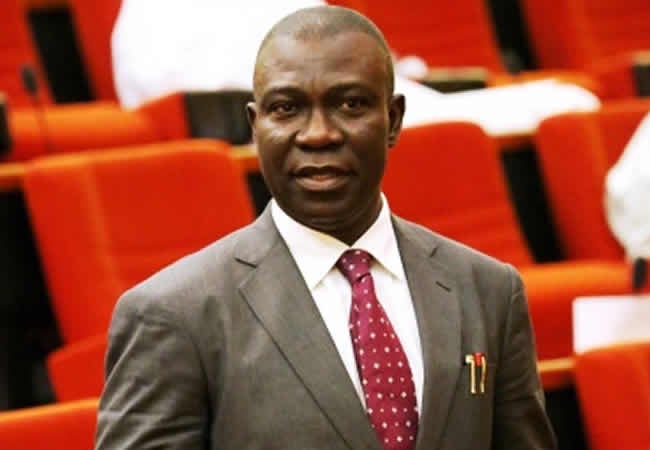
The Progressive Students Movement, a pan-African students’ movement, on Sunday, condemned the attack on Sen. Ike Ekweremadu by the proscribed Independent People of Biafra in Germany.

PSM also called on the members of IPOB to tender an unreserved apology for the global embarrassment the incident caused Ekweremadu and the entire country.

The President of PSM in Nigeria, Mr Bestman Okereafor, said this in a statement made available to the News Agency of Nigeria in Enugu.

Okereafor said: “The attention of PSM has been drawn to an unfortunate and embarrassing attack on a distinguished Senator of the Federal Republic of Nigeria in faraway Germany by members of the proscribed IPOB.

“Information at our disposal reveals that distinguished Sen. Ekweremadu had honoured the Second Annual Cultural Festival and Convention organised by Ndi-Igbo Germany in Nuremberg on Saturday only to get attacked by some unpatriotic Nigerians residing in Germany.

“PSM considers the attack on Sen. Ekweremadu in Germany as a global embarrassment to our beloved country.

“It is however on record and worthy of note that Sen. Ekweremadu remains a leading figure among a few other Igbo senators who have consistently spoken against the unfortunate killings and kidnappings in Nigeria as a whole.”

Okereafor, however, said that PSM was using this medium to send a strong note of warning to Igbos in Diaspora to shun acts capable of diminishing the hard built and industrious reputation of Igbos all over the World.

“We call on all Igbos both at home and in the Diaspora to remain peaceful, hardworking, united and loving as this remains the core values of the Igbos, in our quest for a united and peaceful Nigeria,’’ he added.

Ekweremadu was physically attacked by the IPOB members who accused him of not partnering them.

They also accused the senator of alleged conspiracy in the events that led to the proscription of the group by the Federal Government in September 2017 through the Federal High Court, Abuja.

(NAN)

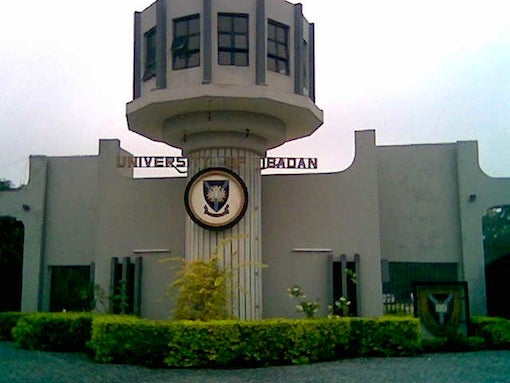
UI announces date for Post-UTME Screening

The University of Ibadan, UI has fixed Friday 06 and Saturday 07, September 2019 for its post-Unified Tertiary Matriculation Examination (Post-UTME) screening into all courses/programmes for the 2019/2020 academic year.

This was contained in a statement issued by the school’s Registrar, Mrs Olubunmi Faluyi.

She advised the prospective students who registered for the post-UTME exercise to check the Admission portal for information on the specific date when and venue where they will be screened with effect from Monday, 02 September, 2019.

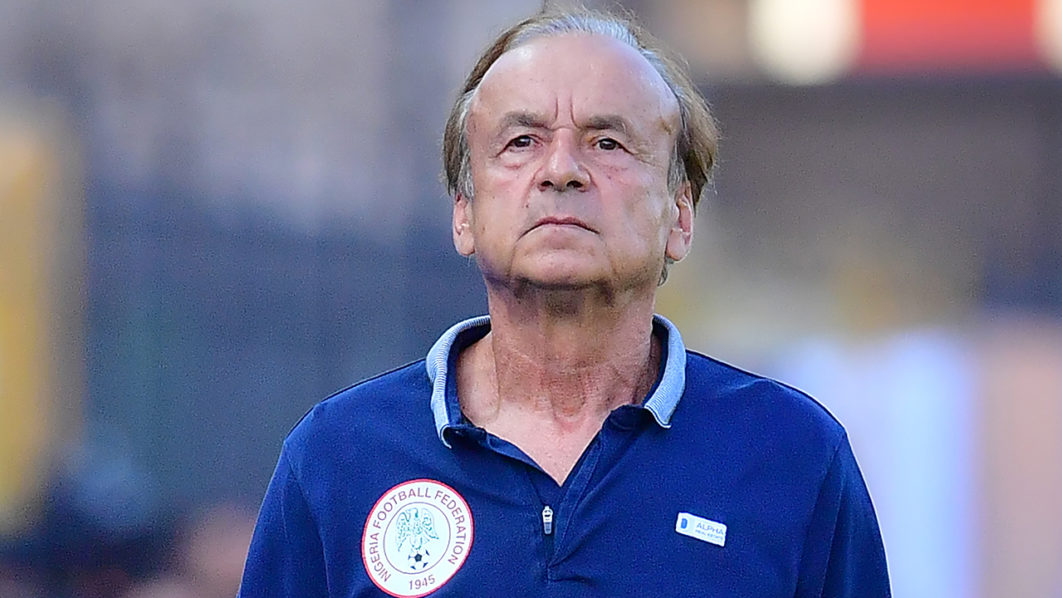
A Letter to Gernot Rohr

Gernot Rohr’s men puts you off at first contact, although his wiry look suggests that he thinks round the clock about his job.

Rohr isn’t scared to talk about his job. He listens and waits to answer questions, showing his depth and willingness to improve on his work ethics.

He comes across as a man who is determined to meet his targets, except those set for him by his employers, Nigeria Football Federation (NFF), given the potential of our players. NFF’s mandate to Rohr showed gross misunderstanding of the brand that they had.

Otherwise, how do you task Rohr with a semi-final mandate at the 2019 Africa Cup of Nations, where 99 per cent (Only goalkeeper Ikechukwu Ezenwa plays in the domestic league) of his boys play in Europe. The argument that Nigeria had missed the last two editions is laughable and can the likened to doubting the predatory instincts of the lion simply because it had been ill. Nigeria, given the abundance of talents in the country’s 774 Local government areas should win the continent’s biggest soccer diadem in default – it should be our birthright.

The 2019 Africa Cup of Nations is over with Nigeria belittling herself with a bronze medal, largely because we make our players look like they are indispensable. Little wonder they are easily provoked and ready to upset the applecart for lucre. They pour odium on the country over things they dare not do in their European clubs. The best way to stop this show of shame is for both the NFF and Rohr to drop the ringleaders. Besides, those who have spent close to six years in the team should be eased off, if we are sincere in our quest to excel at the 2022 World Cup in Qatar.

It isn’t enough to bask in the fact that Nigeria fields the youngest set of players at competitions, like Rohr always says. It will be worth celebrating, if these young lads qualify Nigeria for the Qatar 2022 World Cup final. Such a feat will open new vistas for the players and persuade foreign scouts to visit Nigeria in search for budding talents. The invasion of the country with foreigners will elicit good business deals which will invariably rub off on the quality of our domestic leagues and competitions.

The spiral effects of attending big soccer tournaments have been lost on us because our mentality of perpetually rebuilding our teams after every failed adventure. Winners of tournaments are built from generations (at least two) of previous appearances), hence the fluidity in their games. The growth pattern is such that engages the good players in their age grade teams when a vacuum exists. This transition is possible because coaches at the age grade levels are integrated into the senior from when the country’s playing style evolves.

Nobody can fault this NFF board in terms of getting quality matches for the Super Eagles. Unlike in the past when such Grade A games are played mostly on the pages of the newspapers, this new NFF get their friendly games confirmed by the opponents to throw into the dustbin any thoughts of it being fake news.

The September 10 international friendly between Nigeria and Ukraine in Dnipro is a superb test for the Eagles since the Ukrainians are presently ranked 25th in the world unlike Nigeria which is 33rd. Yet, this game provides the best test for our goalkeepers comprising Francis Uzoho (Anorthosis Famagusta, Cyprus); Ikechukwu Ezenwa (Heartland FC) and Emil Maduka Okoye (Fortuna Dusseldorf, Germany). Not a few Nigerians have celebrated the exit of Daniel Akpeyi, with a few others pleading that he shouldn’t return to the team, if the coach knows his onions.

This latter group are not raising the alarm over nothing since we have this tendency of unearthing forgotten stars under the guise of trying to tap from their experience. I always ask when the younger ones will garner such experience when they are benched by older but ageing stars?

I can’t fault Rohr’s preference for Emil Maduka Okoye (Fortuna Dusseldorf, Germany) because we watch him weekly where he has distinguished himself in matches. I wish we had a more vibrant domestic league administered by people who can be challenged to ensure that Super Eagles is populated by home-grown players by 2022, not those who remember the league exists, only when the season begins.

Goalkeeping has been Eagles’ bane. Rohr needs to recruit a renowned goalkeeper’s trainer to drill those invited, although his Nigerian assistants were goalkeepers for the same team. Clemens Westerhof did that for the Eagles and it worked perfectly. It is laughable that our goalkeepers at the Africa Cup of Nations set a defensive wall, yet they stood behind it, leaving sufficient gap for the strikers to score the goals. If Rohr feels comfortable with his assistants, then he should insist on inviting only those who play regularly in Europe.

One of the problematic areas of the Eagles at the 32nd africa Cup of Nations was its defence. Our defenders were slow to react to passes and lacked the pace to outrun the strikers. I thought Rohr would address this problem. Yet, Rohr re-invited Leon Balogun for the September 10 international game against Ukraine, even as he hasn’t played a game for Brighton this season. The coach invited the same defenders, giving the impression that they are indispensable.

These defenders wouldn’t feel challenged to improve, if they are selected regularly. What beats most pundits hollow about Rohr’s choices, is that he has repeatedly stated that he will overhaul the team’s defence. Is this how he wants to do it? Rohr’s employers should remind him that he should develop the domestic game, which can only happen if he lives with us. He can’t be defining his job schedule when we know that the bulk of players he is banking on began their game here. They would never have played for Nigeria, if the coaches who discovered them relied entirely on foreign-based players.

Rohr insulted our sensibilities by sticking with these leaking defence comprising of Olaoluwa Aina (Torino FC, Italy); Tyronne Ebuehi (FC Benfica, Portugal); Chidozie Awaziem (FC Porto, Portugal); William Ekong (Udinese FC, Italy); Leon Balogun (Brighton & Hove Albion, England); Kenneth Omeruo (CD Leganes, Spain); Jamilu Collins (SC Padeborn 07, Germany); Oluwasemilogo Ajayi (Rotherham United, England). Only Ajayi and Collins are playing active soccer, while the others are either torn between getting new clubs and training for the new season.

No prize for predicting that Ukraine will beat Nigeria. It’s the reason Rohr should take risk on some of the good defenders in the domestic game. The argument that it is always difficult to get them entry visas is weak since these logistic details should be embedded in the contract signing documents for such international friendly games. It is true that our foreign legion can easily storm Dnipro in Ukraine. But it doesn’t foreclose the need to impress it on countries willing to pay against Nigeria to consider our domestic league players. I would rather home-based players accompany the team to Ukraine than the litany of Agbada-wearing administrators who have not added value to the game’s growth. The time to plan for the Qatar 2022 World Cup is now, using the qualifiers for the 2021 Africa Cup of Nations and the Mundial.

No changes in the midfield except for Joe Aribo who plays for Glasgow Rangers in Scotland. I’ve my reservation for his choice even though I’m not a coach. The Scottish isn’t competitive. the only plus here is that they are in this year’s UEFA Champions League. Only Rohr can explain Aribo’s choice because not many of us watch the Scottish league. I sincerely hope that his choice is spot-on.

The midfielders picked such as Alexander Iwobi (Everton FC, England); Wilfred Ndidi (Leicester City, England); Oghenekaro Etebo (Stoke City FC, England); Kelechi Iheanacho (Leicester City, England) and Joe Aribo (Glasgow Rangers, Scotland) are good. My worry is the placement of Iheanacho as a midfielder. Coaches who have worked with Iheanacho have identified him as the straight-jacket central striker, who cannot function elsewhere but as the traditional number 9. Perhaps, Rohr has something in Iheanacho which others haven’t. But it is important that he plays in the position he trains weekly for his club. The trio of Ndidi, Iwobi and Etebo did well in Egypt. But Rohr needs bigger players in that department, although our smaller ones are good battlers for the ball. My other worry will be their predictable style, which many countries can exploit. We need better players to give them good competition and increase our options during matches.

At the Africa Cup of Nations, Eagles struggled with high balls and couldn’t handle situation in between the defence and the midfield. It accounted for the free kicks taken against them. Perhaps, Rohr needs a defensive midfielder to literally sit in front of the two central defenders to plug the holes created by ball dropped behind the midfielders.

Rohr has picked strikers who on their day could win matches for the country provided they get good passes released to them early from the midfield.

Forwards such as Ahmed Musa (Al Nassar FC, Saudi Arabia); Victor Osimhen (Lille OSC, France); Moses Simon (Levante FC, Spain); Henry Onyekuru (AS Monaco, France); Samuel Kalu (Girondins Bordeaux, France); Paul Onuachu (FC Midtjyland, Denmark) and Samuel Chukwueze (Villarreal FC, Spain) are coaches’ best bets to wreak havoc on any opposition. They are good runners, dribble well but their last touch on the ball, most times are faulty.

Rohr would need to place more emphasis on how our boys redouble their efforts when they get towards the opposition’s defence.

Only enterprising teams can outrun closely knit defences. Such tact to unlock such defences come with a lot practice coupled with the resilience of the attackers. Our players should be taught how to be selfless and give the players in the best positions to score the goal the ball. goals count in matches not missed chances.

Beating Ukraine in Dnipro is achievable but will require a lot of tact and zeal to win by our players, because they are a very good team.

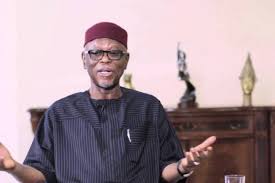
Compromise by factions in Edo crisis won’t solve problem –Odigie-Oyegun

Former National Chairman of the All Progressives Congress, Chief John Odigie-Oyegun, tells SOLA SHITTU about his childhood and the state of the nation

How would you describe life at 80?

Well, it’s been a beautiful life full of challenges to overcome. There are few downsides too but from which one bounced back and continued the journey. Considering everything, God has been kind. God has been faithful and whatever I have set my heart on, I have attained largely. Yes, I’m happy. I’m satisfied. I’m fulfilled and I consider my life from birth to age 80 as a great gift from God.

Is there anyone you met as a child that you can never forget?

If you want me to mention a particular man, I will mention my uncle who lived with my father. I was just calling him an uncle; he might be a cousin but he looked so big that we just called him uncle. He did something that changed my life and I have talked about it on and on and I won’t stop talking about it. At Class Three going to Class Four in secondary school, I did so well. Normally, that was not a surprise. What everybody asked was whether I passed and was going to the next class. I would say yes and they would say congratulations. But at that time, around 1954 or 1955, I did so well; I came third out of 90 pupils in the class and he went inside and gave me one pound. One pound around 1954 was a lot of money and for the first time, I felt appreciated in a major way. So if you want to talk about one person who taught me a lot of things, I would choose him. I mean that one single act taught me a lot of life lessons. But of course, there are people I admired when I joined the civil service. But fundamentally, this one uncle of mine was unique.

Do you consider yourself as adventurous?

Yes, very much so, adventurous mainly in academic activities. I was a very voracious reader; I read way more than my level of education at that time. In elementary school, I was already reading William Shakespeare’s books. In elementary school, I knew Mark Antony’s speech in Julius Caesar offhand. Every Christmas, when we were together, each of us would do one thing or the other; I used to recite Mark Antony’s speech. So I was very much used to the library. We had a Benin Council library where I used to read books – ancient and modern. To me, it was clear there was nothing like information and I was sure all that helped me build up my knowledge base, not necessarily academically.

What kind of relationship did you have with your siblings?

My father had 26 children and I was the fifth child; it was a polygamous family in one large building. Each mother had her own room and all the children congregated in the room at night to sleep. Of course, during the day, we were all over the compound. As long as we didn’t make too much noise to disturb the old man, we were okay and everybody was happy. It was a relatively good home, relatively peaceful home, in spite of the polygamous nature, and it was very interesting. At night, every child went to ‘roost like chicks’ in their mother’s room and in the morning, we woke up and did all the chores. The bigger boys, of course, swept all the compound, did the pounding of yam and girls, of course, did most of the cooking.

Were you closer to your mother as a child?

That is a difficult one; it is difficult because children were under the umbrella, most of the time, of their mother. Our mothers were protective. They were the ones we talked to and they were the ones who could caution and advise us. My father was stricter than my mother; he was the disciplinarian of the family. Of course, we were not very close to my father. I started getting close to my father to understand him when I became an adolescent, went into the university and did all that. Just before he died; whether it was a premonition that something would happen, I don’t know, but he called me one day and said he was coming to Lagos and I agreed. Then to my shock, he said he was going to stay with me. I went into a panic and told my wife that it had never happened before.

Eventually, he came and stayed with us. Then he gave me his Omega wristwatch to take to either Leventis or the UAC for repairs and that was the last time I saw him alive. Some weeks later, he was dead. There was no doubt that he came to say goodbye. It was a very interesting experience. I think that wristwatch was meant for me. Normally, we share the chattels of our parents and that was the only thing I took. I said my father gave me this watch so he meant me to keep it.

What did your father’s last visit mean to you?

In a sense, it was an expression of his love for me because of the things that had happened between us and the way the relationship developed. It was quite different, we had had issues and all originated from my feeling that he was unable to meet my basic needs. I think I was the one that changed because, with greater knowledge of his limitations, I got a new appreciation of the sacrifices that he made to ensure that all his children went to school. He was above 60 years old when he died as a result of complications from a motor accident. Otherwise, he was a solid, strong man; he would have lived up to 90 or even 100 years.

How would you describe your social life?

I don’t like crowds; I don’t like large crowds. I enjoy small intimate groups where I can laugh, enjoy myself and crack jokes. I like laughing a lot and I like jokes a lot. But I am basically an introvert. I like small parties of 10, 15, 20 people. I hate noise a lot and I’m so uncomfortable at parties because of the level of noise there. I want a party where I can talk to people, where we can exchange views. But a party where you have to scream for the person beside you to hear is totally unnecessary.

Do you dance?

Ahh, no. I’m not sure I’m good at dancing at all but I dance when it is necessary. But it is not something I’m motivated to do.

What kind of music do you listen to?

I like soft music, classical music, jazz and so on. But choral music is fantastic.

Who is your favourite jazz artiste?

My favourite is Yanni (Yiannis Chryssomallis). I also like (Roy) Campbell and his trumpet. I like the kind of music that is soft such that when it is played, your consciousness is there; it is not disturbed. It is affecting your psyche but not intruding into your thoughts or whatever you are doing.

As a retired civil servant, can you say the standard is still the same as you left it?

No, a lot of things have happened; politics, corruption and the right commitment are no longer there. We were lucky we came in during the post-independence era, just a while after the independence when there was so much passion. The future was, of course, very bright. Oil was just becoming a factor, the British civil servants were still around and we were a nation of a truly great future. The whole world was celebrating us. It is difficult to tell where we missed the plot, where we took the wrong turn and why we have been unable to recover and get back on the road to greatness. It is very difficult. But the truth is that we have continued on the downward slide.

Nobel Laureate, Wole Soyinka, once described his generation as “wasted” and you belong to that generation, do you subscribe to his view?

Well, Soyinka is very dramatic with his words. He uses words to dramatise situations and to call attention (to issues). All he was saying was that we had not achieved our potential. That is my own interpretation. We fall far short of our potential, even till this date. All those things we left behind, even as civil servants, are in a state of disrepair. There is no comparative replacement all these years and it is worrisome, it is painful and disappointing. I pray that one day; we will find our way back to the path of growth and development.

Why has the All Progressives Congress, which you led as a national chairman, not brought the much-desired change to the masses?

It’s like a child blaming the father for not being able to provide for him; when he becomes a father, he will know why. The problems were much more than we anticipated. I hope the Next Level (campaign) will produce the kind of result that will now place the nation on the path of growth. We cannot afford to still give excuses again.

How do you feel about the level of insecurity in the country now, knowing that it was one of the central points of your campaign in 2015?

I don’t think we are on top of the situation. Sometimes, I read in the media opinions that there must be total peace but I accept that where we are now is far from being good, when even citizens of the country feel unsafe. I can speak for myself and say that if I could avoid travelling outside Benin City for even 10 km, I would do it. I know they (bandits) kidnap in cities too. They kidnap in towns but, at least, you are a bit safer in your bedroom than on the highways. So, yes, we have a serious challenge in the way the new security threat is manifesting itself. I think there are people out there, whether in this country or outside the country, that are trying to get Nigerians into thinking that the government cannot protect them and that is a very dangerous thing.

Do you see Nigeria breaking up with all these myriads of problems?

Let me start by saying this: I am an irredeemable believer in the unity of this nation and the potential for greatness as the leading black African nation in the world. Anybody who wishes otherwise must have some questionable objectives. So, it is for us to work and fix the problems. Yes, some problems threaten the fundamental basis of our unity; there is no question about that. You cannot but have fears with the way people are beginning to express tendencies of disunity with some of their actions; people are getting so careless about it, so very careless that I sometimes feel offended and very angry about it. That we have a problem does not mean that people should start propagating disunity; it’s not fair. It’s not something we should wish on ourselves because it will take generations to come out of any division of this country. Anybody who loves this country and the community he comes from must stop preaching disunity because it will be too costly for this nation.

Why was it difficult for successive governments to really sit down and talk about the problems of this nation?

No, there is no need for a discussion; there has been too much discussion already. The issues are clear and they are part of the credo of the APC that we must do some tinkering with the federal structure. There is no question about it; read our manifesto. Virtually every page has something on the need to rearrange the system, to tinker with the present structure which will involve the redistribution of power, structure and the rest to create credible developmental notes in the federating units so that Abuja does not become the beginning and the end of the story of Nigeria. During my time as the national chairman, I set up a ‘high-powered’ party committee to direct the debate to truly define what we mean by the so-called restructuring because there was the disparity in the meanings people gave it.

When you say restructuring, some say let’s go back to the old regional structure, some say let’s go back to the six geopolitical zones. So, there was a need to bring some focus into the discussion and there was a paper on it which was already approved by the party’s National Executive Committee at the highest level and the party was to start the process. It may not be in one swoop, it may be gradual, and all these include regional police, state police. Read the document; it is there. So, there is no need for having endless conferences and the rest of them, and that was based on all the major recommendations of previous conferences. So, we have passed the stage of having conferences; we are now at the stage of implementation. For me, there are so many aspects to it. There may be one thing or the other that influential groups from different parts of the country may not agree with which may negate the report. My suggestion is to start with those areas where there are agreements already. Unfortunately, the economic problems of the country were so much that the President told us to hold on to enable him to tackle the economic problems first and do things that would put bread on the table of Nigerians first. That alone is a major challenge. I think restructuring is totally inevitable because there is no part of Nigeria now that is not going through one thing or the other.

As a former governor, what is your take on the lingering crisis in Edo?

My people used to say sweeping the dust under the carpet will not solve the problem. What is the use of elders in a society? Elders are supposed to speak the truth. Sometimes, compromise at all cost will not solve the problem. I am aware of what is going on and I am encouraging it; precariously, I’m part of the argument in a tangential way. A lot of things are going on and I know we would find a way out of it. The basic thing for me is that truth must be told and you must not use analgesic to cure a basically cancerous situation; no, it doesn’t work.

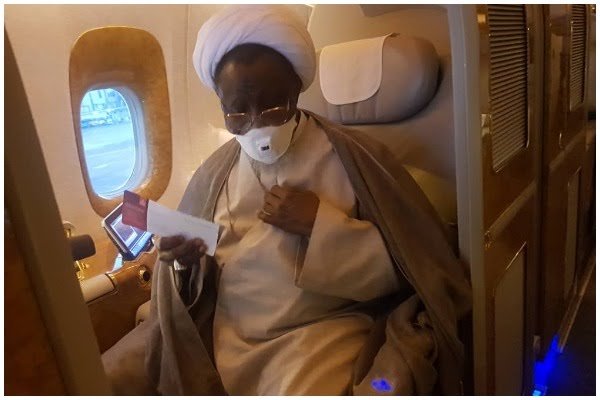
El-Zakzaky’s followers vow to continue struggle

Barely four days after they were flown to India for medical treatment on the order of Kaduna State High Court, leader of the proscribed Islamic Movement, IMN, in Nigeria, Sheikh Ibrahim El-Zakzaky, and his wife, Zeenat, were brought back to Nigeria yesterday.

The Ethiopian airplane carrying the couple arrived the Nnamdi Azikiwe International Airport yesterday at 12:01pm. The couple were however, whisked away immediately from the VIP section of the Abuja airport to an unknown destination by operatives of the Department of State Services, DSS.

On their arrival at the Indian hospital where treatment was expected to commence, the trip to the Asian country turned controversial with allegations and counter allegations between the Shiite leader and the security operatives who accompanied him and his wife from Nigeria.

When they returned to Nigeria yesterday, they were not allowed to speak with the newsmen who were waiting to have a chat with them.

The government has however explained why the Shiite leader and his wife were suddenly brought back to Nigeria.

The Federal government said that El-Zakzaky and his wife were repatriated to Nigeria from India due to his misconduct and disrespect of international procedures while in Indian hospital.

A statement issued on Friday, signed by Permanent Secretary, Federal Ministry of Information and Culture, Grace Isu Gekpe said apart from demonstrating lack of decorum in India, El-Zakzaky’s actions demonstrated malicious intents that were capable of embarrassing the Governments of Nigeria and India.

Gekpe said the IMN leader while in India initiated contacts with a team of lawyers led by Ali Zia Kabir Chaudary and Gunjan Singh in that country and went further to contact some Non-Governmental Organizations (NGOs), such as the Islamic Human Rights Commission (IHRC) and other Shiite groups with the aim of seeking asylum and eventually relocate to another country.

According to the statement, ‘‘The Federal Government wishes to inform the public about the latest development in the Ibraheem El-zakzaky medical trip controversies to India.

The Government notes with dismay the acts of misconduct exhibited by El-zakzaky that necessitated his repatriation.

‘‘The earlier statement of 14th August 2019 by the Government addressed the issues that would have raised some questions with the latest occurrences and particularly the uncelebrated return of El-zakzaky from India.

‘‘The public may note that El-Zakzaky’s actions in India demonstrated malicious intents that were capable of embarrassing the Governments of Nigeria and India. ‘‘With total disrespect and complete loss of decorum for international procedures while in India, he initiated contacts with a team of lawyers led by Ali Zia Kabir Chaudary and Gunjan Singh in that country.

‘‘He also contacted some Non-Governmental Organizations (NGOs), such as the Islamic Human Rights Commission (IHRC) and other Shiite groups. His aim was to seek asylum and eventually relocate to another country.

‘‘It is important to note that if an Indian court had granted El-zakzaky asylum or leave to travel to another country, it would have violated the Nigerian court order that granted him permission to travel for medical treatment.

However, he used the opportunity of being in India to attempt to internationalise his cause by mobilising the Rights groups.

Even most unfortunate and rather embarrassing as earlier stated, was his quest to be relocated to a 5-Star hotel to receive visitors instead of being admitted in the hospital as a sick person he claimed to be.

‘‘In spite of his misconduct, El-zakzaky’s spouse went further to antagonize the Indian and Nigerian security agents and accused the latter of killing her children.

These acts were aimed at winning international sympathy as well as disparaging the Nigerian Government.

Having subordinated the quest for medical treatment to other ulterior motives, it became obvious that El-zakzaky was focused on realising some sinister motives thus the decision to return him to Nigeria.’’ In a swift reaction, the IMN in a statement by the President of its Media Forum, Ibrahim Musa, urged the security agency to declare to Nigerians El-Zakzaky’s whereabouts.

The statement reads, “As our leader Sheikh Ibraheem Zakzaky has landed safely at Nnamdi Azikiwe International Airport today, (yesterday) we wish to set the records straight in order to disabuse the minds of Nigerians from the false claims in some sponsored stories and articles in the media concerning his aborted medical treatment in India.

“However before we do that, we vehemently condemn the way the security agents whisked him away upon arrival without allowing the multitude of journalists that were waiting for him for hours to have a chat with him. We urge the security agency holding him hostage to declare to the public where they are keeping him in the country.

“It is a well-known fact that the Nigerian authorities had tried all their antics to see that the Sheikh wasn’t given a medical leave. Distrustful of the Nigerian government’s offer of a jet to take him to the destination, having survived its attempts to poison and kill him while in detention, our leader Sheikh Zakzaky declined the offer and chose to pay for his trip through the Emirates Airline.

“Their ordeal started right here in Nigeria when they were scheduled to board the plane to Dubai. After a two hours’ drive from Kaduna to Nnamdi Azikwe International Airport in Abuja, they were not given enough time to rest before boarding the plane.

They endured an eight hours flight to Dubai and another three hours flight to New Delhi.

“Under normal circumstances, as patients suffering life threatening ailments they shouldn’t have been subjected to such exhaustion.

Nonetheless our leader and his wife endured the journey hoping that they will get good treatment when they reached New Delhi. “However, even though they needed rest, on arrival they were wheeled to a hospital without their personal physician that accompanied them from Nigeria.

They were then subjected to physical examination in the absence of the doctors that examined them in Nigeria and when they requested for their presence, it was turned down. Even a physician that came from London was also denied access to them. It was at this point that Sheikh Zakzaky refused any attempt to have him forcefully treated. “More so, the Hospital compromised its stance and medical ethics, as a result the Sheikh lost interest in the hospital and demanded to see his own doctors for a substitute arrangement.

It is well within every patient’s right to decide whether or not to be treated and to also decide who attends to his health. It is called ‘giving of consent’, which every sane autonomous person with capacity is entitled to.

“Contrary to the Nigerian government’s press statement, that misinformed that it was against “medical ethics and standard practice,” it is in fact at the very essence of medical ethics, which every elementary medical person knows.

“The interference of the government raised suspicion that it was planning to kill the Sheikh in India using its international connections. He insisted that if he would not be allowed to see the doctors that brought him to India he would rather come back to Nigeria and seek another destination for his treatment.

“This became clear because of the government’s stance insisting on other doctors than the ones that he was to meet in India. They finally decided to bring him back for refusing to succumb to be treated by their chosen doctors.

“It is worth noting that the Kaduna High Court allowed the Sheikh to go to India with the government only supervising, instead the federal government presented him to the Indian government as a dangerous suspect with an unknown ailment coming to India and demanded stringent security placed on him. There was even a report that the security agents in India subjected him to physical assault.

“It is glaringly clear that the Nigerian government had an ulterior motive it was nursing using its connections in India when it violated court order and interfered with the procedures of the Sheikh’s treatment.

“This can also be deduced from the way the security agents whisked him away to unknown destination after arrival at Abuja International airport, without allowing him to have audience with the journalists that were waiting for his arrival.

“The Islamic Movement will however continue its struggle to ensure that our leader gets the appropriate medical treatment he deserves as ordered by the Kaduna High court. “And as we continue with the struggle, we wish to reiterate our call for the federal government to comply with an earlier Abuja high court that has freed him since 2016.

We believe obedience to this court order will finally solve the crisis that has been lingering since the Zaria genocide of December 2015.”

Vanguard

Adamawa loses 13 vigilante members in 2 months, 20 others injured

Thirteen members of the Adamawa state branch of the Vigilante Group of Nigeria have been killed and 20 others injured in crime fighting activities in the state in the past two months.

Commander of the group in the state, Muhammadu Murtala, made the disclosure in an interview on Thursday in Yola, the state capital.

Murtala said that the group’s members lost their lives in encounters with various criminal elements in the state, where the jihadist group, Boko Haram is also active.

“We have lost no fewer than 13 members with about 20 of our members injured in the course of fighting crimes across the state. The sad thing is that majority of those killed lost their lives in the course of protecting the lives and property of other Nigerians.

“Nobody is taking care or assisting the families and children of our members who lost their lives,” Murtala lamented, saying that those who sustained injuries have been left to their fate.

He said that the group has contributed immensely to crime prevention in Adamawa state, noting that the group has also captured about 200 criminals involved in kidnapping, armed robbery and other crimes.

The commander said that about 20, 000 registered members of the body have been deployed across the 21 local government areas of the state.

“Our major request is that we want government to assist the families of our deceased members, grant scholarships to their children and take care of the medical expenses of our injured members.

“We are also appealing to the government to assist us, including providing logistics because we don’t have a single vehicle for patrol,’’ Murtala stated.

Design a site like this with WordPress.com
Get started